
226 Views· 09/04/26· Black History
Alkebulan: The Original Africa Continent — History and Name Change
Alkebulan: The Original Africa Continent — History and Name Change
Alkebulan is widely used today in Pan-African and cultural education spaces as a reclaimed ancestral name for Africa. It is often translated as “Mother of Mankind,” “Garden of Eden,” “Land of the Blacks,” or “Land of the Black People.” However, the historical record is more complicated: the claim that Alkebulan was the single original name for the entire continent is popular, but it is not firmly proven by ancient written sources in the same way that names like Libya, Aethiopia/Ethiopia, and Africa are documented in Greek, Roman, and later historical records. Several modern sources repeat the Alkebulan claim, but academic consensus is cautious because Africa has had many names across different civilizations, languages, and regions.
Before the whole continent was commonly called Africa, ancient outsiders used different regional names. The Greeks often used Libya to refer to much of northern Africa, while Aethiopia was used for lands south of Egypt and for African peoples associated with the upper Nile and interior regions. The Romans later used Africa to refer to a region in North Africa, especially around Carthage and present-day Tunisia. Britannica notes that Greeks called the continent Libya, while Romans called it Africa, and that “Africa” originally referred mainly to the northern coast rather than the whole continent.
The name Africa became powerful after Rome defeated Carthage in 146 BCE and established the Roman province of Africa. That province was not the whole continent. It was a Roman-controlled territory in North Africa, roughly around modern Tunisia and nearby regions. Over time, European geography, Roman influence, medieval mapping, and later colonial expansion helped stretch the name “Africa” from a regional Roman term to the label for the entire continent.
So the “name change” was not a single meeting in which colonizers renamed the whole continent overnight. It was a long historical process. A Roman provincial name became a broader geographic label, then European mapmakers and empires normalized it. During the colonial period, European powers used maps, borders, languages, and education systems to define African lands through European terms. That is why reclaiming names like Alkebulan matters culturally: it challenges the idea that Africa’s identity should be defined solely by external naming systems.
Why the Name Matters
The deeper issue is not only what the continent was called. The issue is who had the power to name it.
Names carry authority. Colonizers named lands, tribes, rivers, borders, and nations because naming is a form of control. When outsiders rename a place, they often erase older identities, languages, and spiritual meanings.
Now the Truth
Before the world called it Africa, the continent was known by many names, spoken in many tongues, and inhabited by many kingdoms and peoples. Some traditions remember the name Alkebulan — the Mother of Mankind, the land of origin, the cradle where humanity first rose.
But history tells us something important: Africa was never one empty land waiting to be named. It was Kemet and Kush. It was Nubia and Ethiopia. It was Mali, Ghana, Songhai, Kongo, Axum, Benin, Great Zimbabwe, and countless nations whose names carried power long before Europe drew borders on maps.
The name Africa came through Rome. It began as a name tied to North Africa, especially the lands around Carthage. Over time, that regional name spread across maps until it became the name used for the entire continent. Later, colonizers used that name to divide the land, control its people, and rewrite its history.
That is why Alkebulan speaks to something deeper than spelling. It is a symbol of memory. It reminds us that Africa was not born when Europe named it. Africa had an identity before the invasion. Africa had civilization before colonization. Africa had a history before the world tried to erase it.
The true story is this: the continent’s name was shaped by outsiders, but its soul was never owned by them.
ALKEBULAN
The Continent Before the Colonial Map
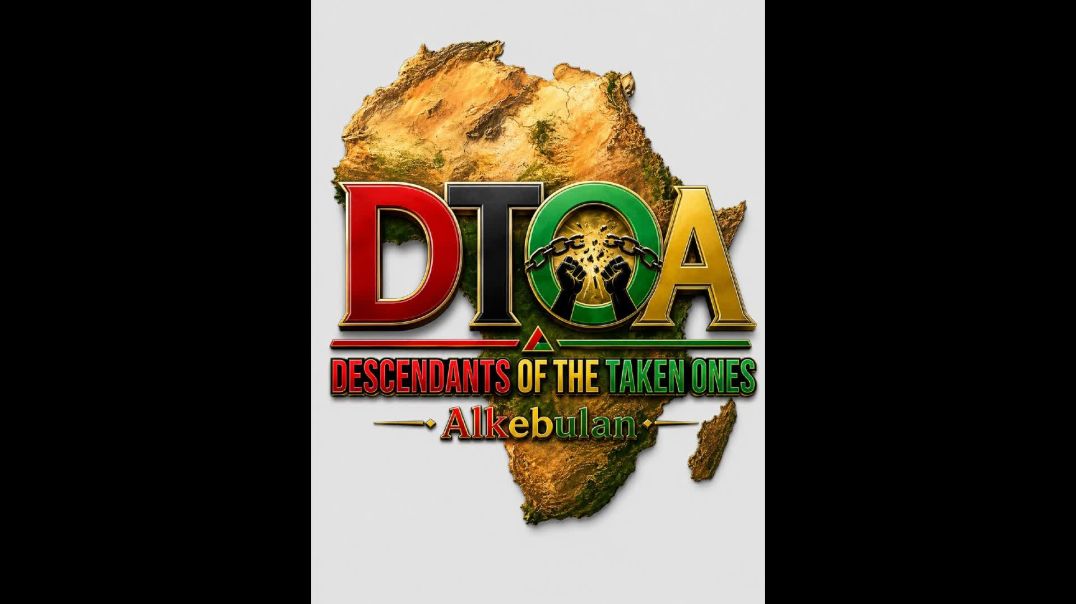
Alkebulan is remembered in Pan-African tradition as an ancestral name for Africa, often translated as Mother of Mankind, Garden of Eden, or Land of the Black People.
The modern name Africa came through Roman and European usage. It first referred mainly to a region of North Africa near Carthage, then expanded over centuries to come to denote the entire continent.
But before outside empires named the land, the continent already held ancient civilizations, languages, kingdoms, spiritual systems, and people with their own names for home.
Alkebulan is more than a name. It is a symbol of memory, origin, and reclamation — a reminder that Africa’s identity existed before colonizers mapped it, renamed it, and divided it.
In Closing Line:
They changed the name on the map, but they could not erase the memory of the motherland.















2 Comments
cliprize
10 days agoJOSEPH ELISHA
1 month ago