
30 Views· 10/07/26· Black History
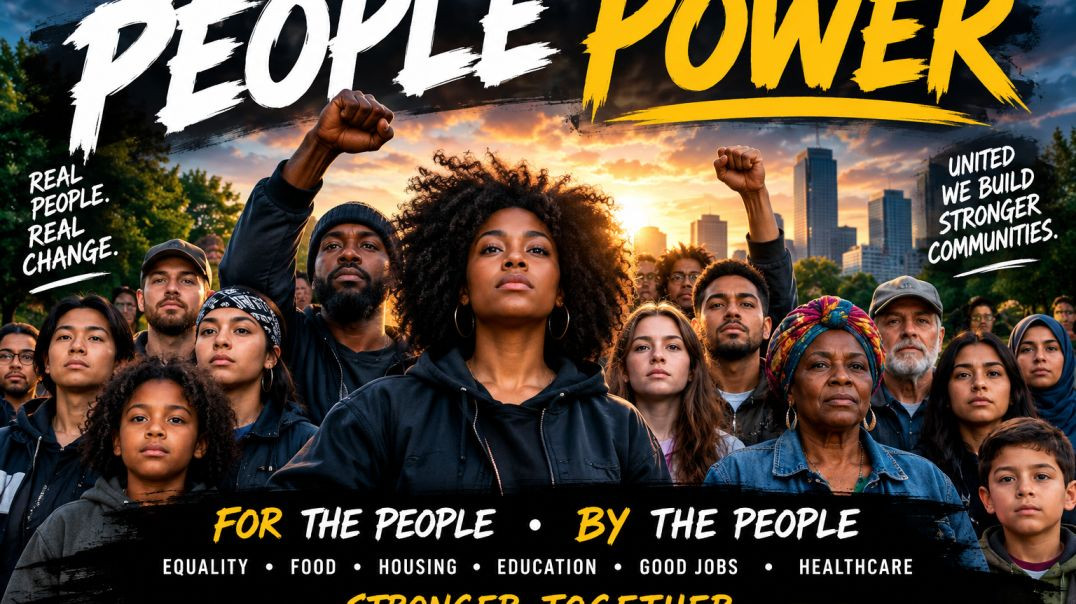
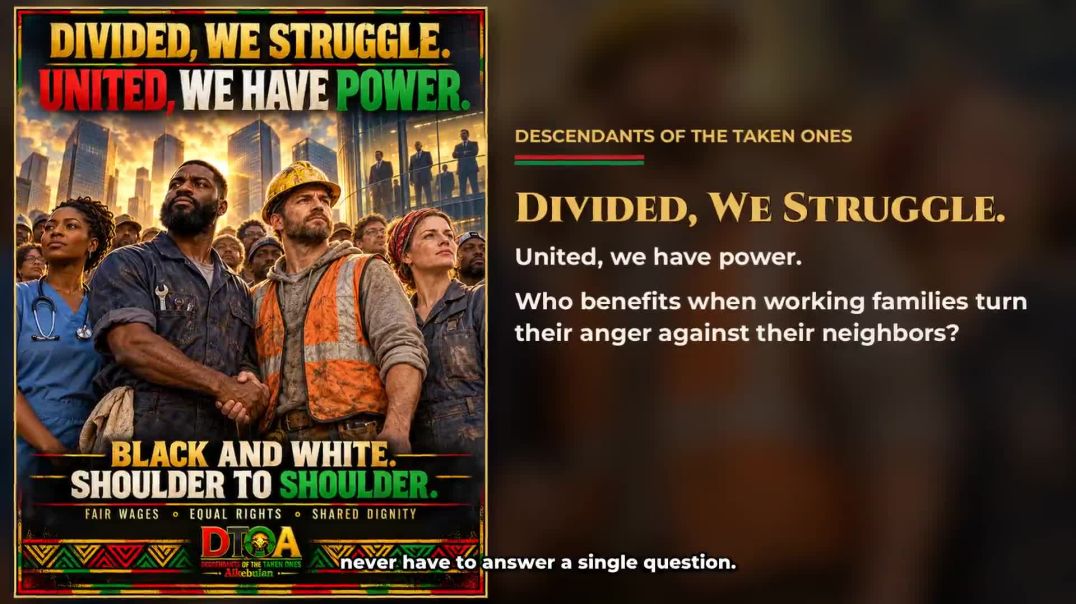
DIVIDED, WE STRUGGLE. UNITED, WE HAVE POWER.

DIVIDED, WE STRUGGLE. UNITED, WE HAVE POWER.
A Black worker and a white worker can spend their lives blaming each other while the people profiting from both never have to answer a single question.
Who sets the wages?
Who controls the land?
Who benefits when working families turn their anger against their neighbors?
America’s history demands that we ask.
In colonial Virginia, wealthy planters depended on the labor of people with little power. During Bacon’s Rebellion in 1676, white servants and enslaved Africans joined the same uprising. Their participation exposed the possibility of cooperation across racial lines—and the danger that cooperation could pose to those governing the colony. Bacon’s Rebellion did not invent racism; it helped reveal why racial division could be politically useful to Virginia’s ruling class. Over time, laws strengthened a system in which poor white people remained economically subordinate but received advantages denied to Black people. Those distinctions helped protect slavery and elite power by making shared class interests harder to translate into collective action. But this history must be told honestly. Bacon was a wealthy planter, and his rebellion included brutal attacks against Indigenous communities. It was no movement for universal equality.
Racial slavery already existed before the rebellion. Virginia had made children inherit their mother’s enslaved status in 1662. The distinction matters because racial discrimination was already being written into Virginia law before 1676:
• 1662: Children inherited their mother’s enslaved or free status, making slavery hereditary through enslaved women.
• 1667: Baptism could no longer free an enslaved person.
• 1670: Black and Indigenous people were prohibited from owning white indentured servants.
Over the following decades, lawmakers strengthened racial divisions, culminating in the sweeping legislation of 1705. White servants received protections denied to enslaved Africans, while Black freedom faced increasingly severe restrictions.
Historian Edmund Morgan argued that fear of an alliance between poor white people and enslaved Black people helped make racial division useful to the ruling elite. A white laborer could remain poor and politically subordinate while being given a racial status above his Black neighbor. That distinction helped bind people with unequal wealth to a shared system of white privilege.
A higher place in a hierarchy does not put food on the table. But it can persuade someone to defend the hierarchy.
That is the warning this history carries.
A white worker gains nothing when a Black coworker is cheated out of wages. A Black family gains nothing when a white family loses its home. Neither becomes more secure by celebrating the other’s suffering.
And real solidarity requires honesty. Black and white Americans have not faced identical treatment. Standing together means confronting racism wherever it appears, including in workplaces, housing, and the institutions meant to protect us.
We cannot build unity by asking anyone to accept injustice quietly.
We build it by refusing to let injustice isolate its victims.
We build it when workers organize for fair pay, defend one another against discrimination, demand safe conditions, and hold wealthy owners and powerful institutions accountable for the people harmed in pursuit of profit.
Let wealth answer for how it was earned.
Let power answer for how it is used.
Let every worker’s dignity matter.
Imagine Black and white neighbors standing shoulder to shoulder and saying:
You will not purchase our loyalty with someone else’s humiliation.
You will not use our differences to excuse our exploitation.
You will not convince us that another struggling family is responsible for decisions made in your boardroom.
We are the Descendants of the Taken Ones, and we remember: Our histories are different. Our dignity is equal. Our solidarity can be deliberate. We honor the ancestors by carrying their struggle toward a future in which no person’s prosperity depends on another person’s degradation. Black and white. Shoulder to shoulder. Fair wages. Equal rights. Shared dignity. Thank you for your time. To support the channel. Please like, share, and subscribe, and pass this along to your family and friends. Remember: information kept to yourself is lost over time, but shared information becomes enduring knowledge. People who lose control of their history can be led to believe they never contributed anything.













0 Comments