
218 Views· 09/19/26· Black History
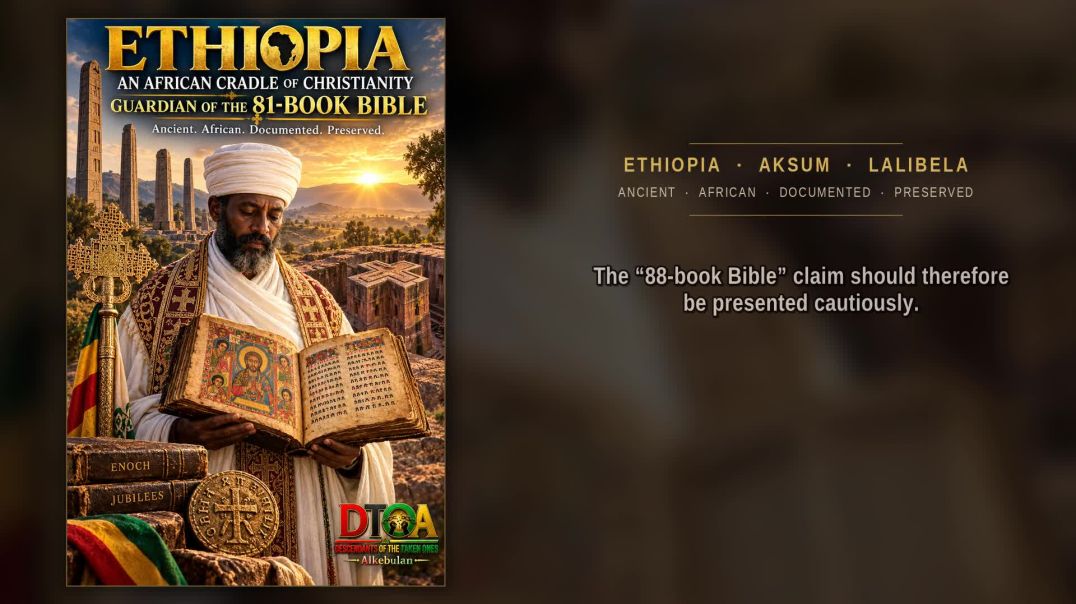
ETHIOPIA: AN AFRICAN CRADLE OF CHRISTIANITY AND GUARDIAN OF THE 81-BOOK BIBLE
ETHIOPIA: AN AFRICAN CRADLE OF CHRISTIANITY AND GUARDIAN OF THE 81-BOOK BIBLE
The “88-book Bible” claim should therefore be presented cautiously. It comes from counting additional church-order and liturgical texts (the four-part Sinodos, the two Books of the Covenant, Ethiopic Clement, and the Didascalia) alongside the core 81, a broader grouping popularized mainly by some commercial English editions rather than by the Church itself. So 81 is the right number to cite as the Church's official total.
Long before Christianity became associated with medieval Europe, the faith had taken root on African soil. Christianity began in first-century Judea, but Africa was part of its earliest expansion. In the Book of Acts, an Ethiopian royal official encounters Philip, accepts the Gospel, and is baptized. This account became an enduring symbol of Ethiopia’s ancient relationship with Christianity. We should also understand that “Ethiopia” in many ancient biblical translations referred broadly to Cush, an African region whose territory did not exactly match the borders of modern Ethiopia. The documented establishment of Christianity in the Ethiopian region occurred through the powerful African Kingdom of Aksum.
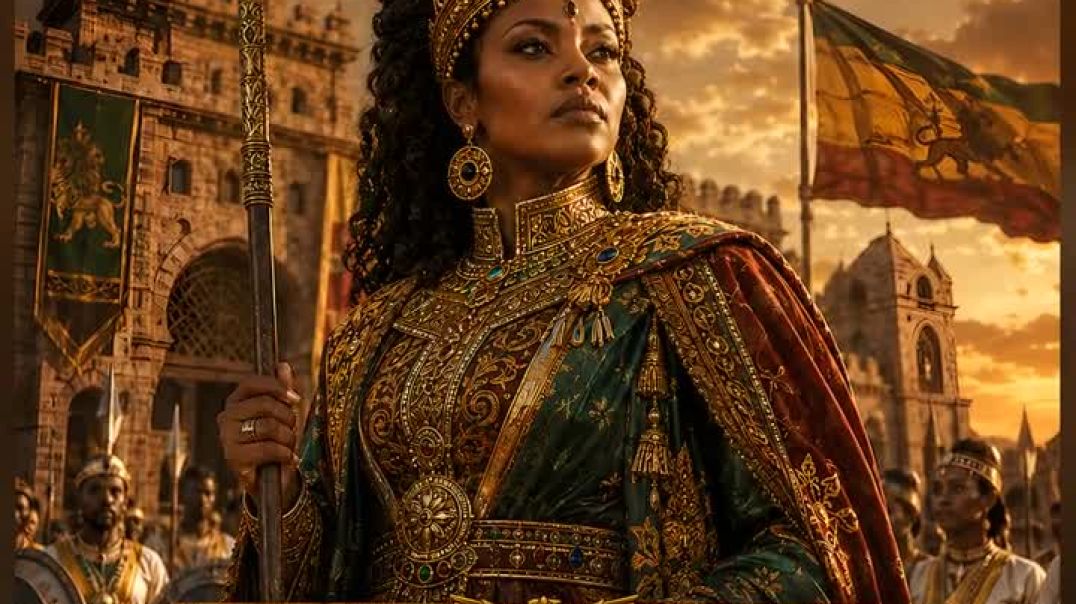
In the fourth century, King Ezana converted to Christianity. Under his rule, Aksum became one of the earliest kingdoms to officially embrace Christianity. Coins bearing the cross provide physical evidence of this transformation. Tradition credits Frumentius, remembered in Ethiopia as Abba Salama—Father of Peace, with helping establish the Church and becoming its first bishop.
But Ethiopia did not merely receive Christianity. ETHIOPIA PRESERVED A DISTINCTLY AFRICAN CHRISTIAN TRADITION. One of the greatest examples is the biblical canon of the Ethiopian Orthodox Tewahedo Church. Most Protestant Bibles contain 66 books. Roman Catholic Bibles generally contain 73 books. The Ethiopian Orthodox Tewahedo tradition recognizes a broader canon, traditionally counted as 81 books, making it one of the largest biblical canons in historic Christianity. Some claim the Ethiopian Bible contains 88 books. That number appears in some popular descriptions because ancient texts can be combined, split, or classified differently. However, the Ethiopian Orthodox canon is most commonly and officially recognized as containing 81 books. The number alone does not tell the entire story, because Ethiopian tradition distinguishes between narrower and broader collections, and not every canonical work has historically appeared in a single bound Bible.
Among the writings preserved in the Ethiopian tradition are: The Book of Enoch
The Book of Jubilees, Three Books of Meqabyan, Psalm 151, The Books of the Covenant, The Books of Sinodos, Ethiopic Clement, The Ethiopic Didascalia
The Ethiopian Books of Meqabyan should not be confused with the Books of Maccabees found in Catholic and Eastern Orthodox Bibles. Although their names are related, their content and stories are substantially different. The Book of Enoch is especially important. Although Enoch is quoted in the New Testament’s Letter of Jude, most Christian traditions do not include it in their biblical canon. Ethiopia preserved the complete Book of Enoch in the ancient Geʽez language, while the complete work disappeared from most of the Christian world. Centuries later, Aramaic fragments of Enoch were discovered among the Dead Sea Scrolls, confirming that the work had ancient Jewish roots. Ethiopia did not write Enoch, but Ethiopian scribes and believers played an extraordinary role in preserving its complete textual tradition.
The Book of Jubilees had a similar history. It was known in the ancient world but disappeared in its complete form from most traditions. Its preservation in Geʽez allowed the full work to survive. This makes Ethiopia more than an early Christian kingdom. ETHIOPIA BECAME A GUARDIAN OF ANCIENT SACRED LITERATURE. Generations of African monks and scribes copied manuscripts by hand. Ethiopian scholars preserved scripture through invasions, political upheaval, isolation, and the destruction of churches and libraries. Their work protected religious texts that might otherwise have been lost. The Geʽez manuscripts, sacred music, illuminated Gospels, processional crosses, monasteries, fasting traditions, and rock-hewn churches of Lalibela reveal a sophisticated African Christian civilization. This history dispels the misconception that Christianity first entered Africa through European colonialism. Christian communities flourished in Egypt, Nubia, North Africa, and Ethiopia during the religion’s earliest centuries. Africans were not standing outside Christian history, waiting for Europeans to introduce them to the faith.
Africans were believers, theologians, bishops, monks, translators, scribes, artists, and defenders of Christianity more than a thousand years before the modern colonization of Africa. Ethiopia is not the literal birthplace of Christianity—but it is rightfully honored as one of Christianity’s oldest homelands, one of its great African cradles, and a guardian of one of its broadest biblical traditions. Its sacred legacy is: Ancient. African. Documented. Preserved. Still living. ETHIOPIA—AN AFRICAN CRADLE OF CHRISTIANITY AND GUARDIAN OF THE 81-BOOK BIBLE
Descendants of the Taken Ones—recovering the history that the world too often forgets. Thank you for your time. To support the channel. Please like, share, and subscribe, and pass this along to your family and friends. Remember: information kept to yourself is lost over time, but shared information becomes enduring knowledge.













2 Comments
cliprize
7 days agoJOSEPH ELISHA
20 days ago