
13 Views· 11/09/26· Black History
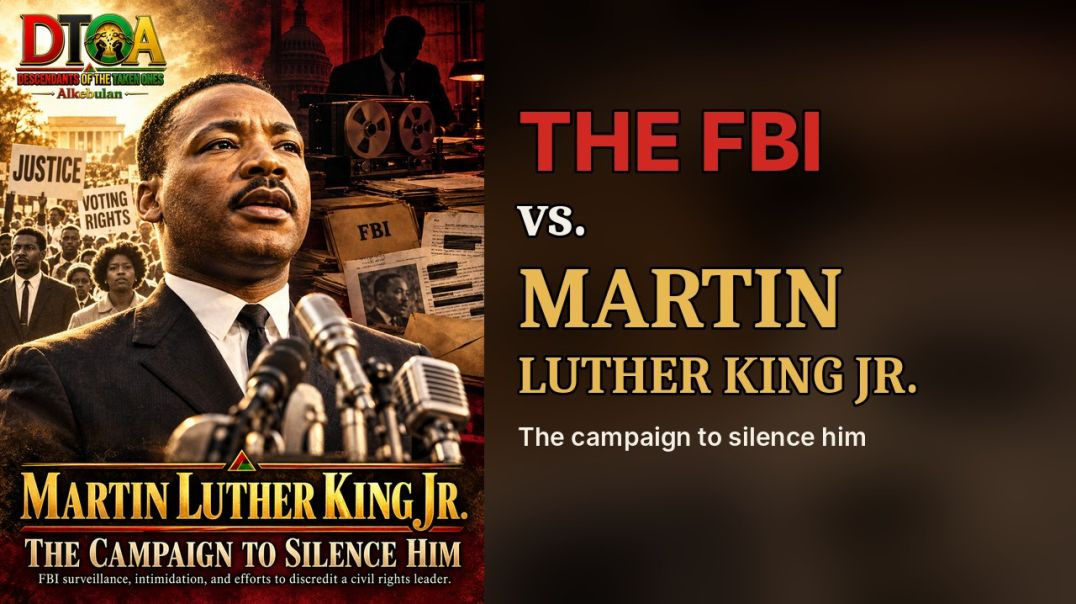
MARTIN LUTHER KING JR.: THE FBI CAMPAIGN TO BREAK A MAN DEMANDING FREEDOM

MARTIN LUTHER KING JR.: THE FBI CAMPAIGN TO BREAK A MAN DEMANDING FREEDOM
Descendants of the Taken Ones Martin Luther King Jr. preached that America should honor its promises. He demanded voting rights, equal treatment, fair employment, and an end to segregation. He organized marches and urged people to confront injustice nonviolently. The FBI placed him under surveillance—and went beyond merely watching him. Bureau officials sought information to undermine his reputation and weaken his leadership.
King’s case reveals what can happen when an agency’s investigative power becomes a weapon against someone challenging the country’s racial order.
How suspicion became surveillance
Under Director J. Edgar Hoover, the FBI justified its scrutiny, in part, by citing concerns about communist influence within the civil rights movement. One focus was Stanley Levison, a close adviser to King who had previously maintained ties to the Communist Party. That association became a basis for investigating King. It did not establish that King took orders from communists or that the movement he led was a foreign-controlled operation.
In October 1963, Attorney General Robert F. Kennedy authorized wiretaps on King. The FBI also used concealed microphones to record him in hotel rooms. Its surveillance extended deeply into his private life. The distinction matters: investigating a specific security concern does not justify an unrestricted campaign to destroy someone’s standing.
The effort to discredit him
The bureau gathered intimate material and attempted to circulate damaging information among people who could affect King’s public influence. Officials sought opportunities to turn journalists, supporters, and institutions against him. This placed extraordinary government power behind an effort to weaken a Black leader whose influence stemmed from churches, community organizing, public persuasion, and the willingness of ordinary people to march.
King was a human being with a private life. His right to lead a movement for equal citizenship did not depend on personal perfection. Nor should allegations recorded by an agency seeking to discredit him be accepted uncritically. A government document can establish what officials claimed or attempted without proving every allegation it contains.
The anonymous package
In late 1964, the FBI sent King an anonymous package containing a recording and an abusive letter. The letter portrayed him as morally ruined and threatened exposure. Its closing language suggested that there was only one course left to him. The Senate’s later investigation understood the message as an attempt to induce King to commit suicide.
Pause on what that means.
An institution entrusted with enforcing the law secretly sent a threatening message to a civil rights leader—a man publicly committed to nonviolence—with the apparent intent of driving him toward self-destruction. The package was part of a deliberate effort to damage him both psychologically and publicly. It demonstrated how far officials were prepared to go beyond legitimate investigation.
He continued speaking
King continued his work. He pressed for voting rights, challenged housing discrimination, supported workers, and demanded attention to poverty. He also publicly opposed the Vietnam War, broadening his criticism of American policy. His persistence should not make the government’s conduct seem less serious. We cannot measure the harm of intimidation solely by whether its target stops working. The public saw a minister at a podium. Behind that public life, federal officials were collecting private information and seeking ways to diminish his voice.
What the investigations revealed
After King’s assassination in 1968, congressional investigations brought the bureau’s abuses into public view. The Senate’s Church Committee documented the campaign against him during its examination of intelligence misconduct in the 1970s. Surveillance, efforts to discredit him, and the anonymous package are among the documented abuses. They do not, by themselves, establish that the FBI organized his assassination. Historical accountability requires us to distinguish what the evidence demonstrates from what it leaves unresolved.
The documented record is already grave enough.
The meaning of King’s case
King was an activist who deliberately challenged unjust laws. That was legitimate civic work. His associations, speeches, and demands for change did not give the government permission to intimidate him.
His case also extends beyond famous leaders. When authorities treat demands for equality as a security threat, ordinary people receive a warning: speaking publicly may expose your friendships, family, reputation, and private life to scrutiny.
That pressure can silence people long before anyone arrests them.
For Descendants of the Taken , remembering King means remembering both his courage and the government's actions against him. Celebrating his speeches while overlooking the campaign to break him leaves a crucial part of his history untold. America honors King today. His history demands that we also examine how American institutions treated him while he was alive.
Thank you for your time. To support the channel. Please like, share, and subscribe, and pass this along to your family and friends. Remember: information kept to yourself is lost over time, but shared information becomes enduring knowledge. People who lose control of their history can be led to believe they never contributed anything.
#martinlutherkingjr #mlk #dtoa #descendantsofthetakenones #alkebulan #blackhistory #civilrights #fbisurveillance #governmentaccountability #freedomofspeech #votingrights #blackvoices #historicaltruth #knowyourhistory #TheCampaignToSilenceHim









0 Comments