
51 Views· 10/30/26· Black History
Phi Beta Sigma Fraternity, Inc. (ΦΒΣ)

Phi Beta Sigma Fraternity, Inc. (ΦΒΣ)
The Three Founders Who Built a Brotherhood Dedicated to Humanity
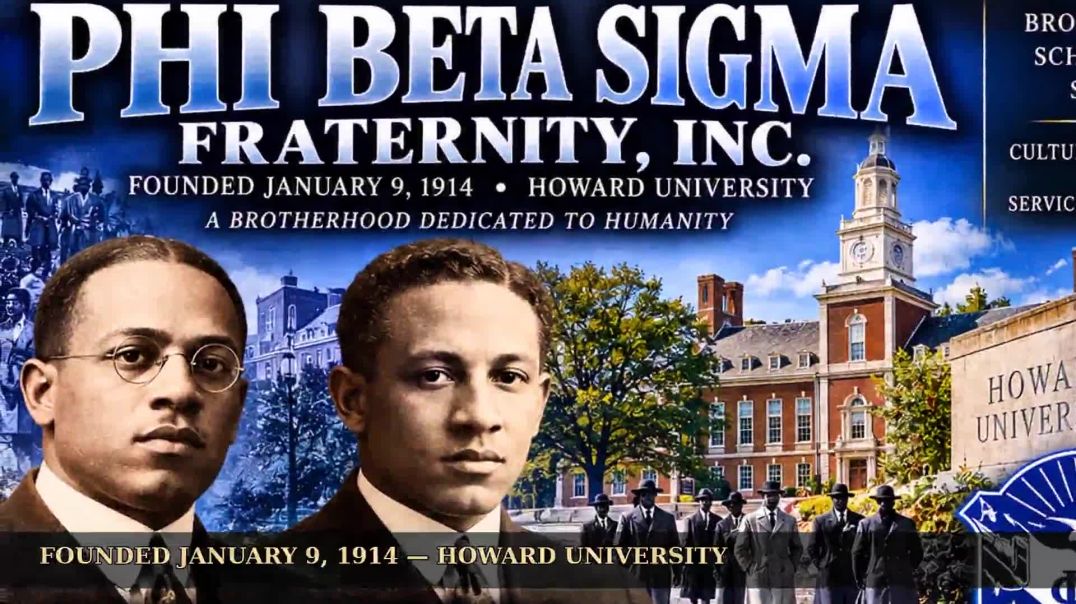
Founded: January 9, 1914
Location: Howard University
Founders: Three African American college students
Colors: Royal Blue and Pure White
Motto: "Culture for Service and Service for Humanity"
Founding principles: Brotherhood, Scholarship, and Service
Affiliation: The Divine Nine, the historically Black Greek-letter fraternities and sororities.
Phi Beta Sigma Fraternity, Inc.+1
1914: Building a Brotherhood That Would Serve Humanity
In 1914, America remained deeply divided by racial segregation, discrimination, and unequal access to education and economic opportunity. African Americans faced barriers to employment, housing, voting, and professional advancement. Yet historically Black colleges and universities were producing a new generation of leaders determined to transform their communities. On January 9, 1914, three students at Howard University in Washington, D.C., founded Phi Beta Sigma Fraternity, Inc.
Their vision differed from that of an exclusive social organization. They believed a fraternity should not separate itself from the people it was meant to serve. Instead, it should become part of the larger community, using education, leadership, and collective organization to improve society. The founders rejected the idea that membership should depend on wealth, family connections, skin color, or social standing. They wanted a brotherhood that recognized individuals for their character, ability, and commitment to service. Phi Beta Sigma Fraternity, Inc.
The Three Honorable Founders
1. Abram Langston Taylor (1890–1953)
Born in Memphis, Tennessee, Taylor became an entrepreneur and fraternity leader. He worked in real estate, insurance, and business development, and he coined the fraternity's motto. His commitment to service helped establish the organization's enduring philosophy.
Phi Beta Sigma Fraternity, Inc.
2. Leonard Francis Morse (1891–1961)
Born in Massachusetts, Morse distinguished himself academically and graduated from Howard University in 1915 with two degrees. He served as a minister and educator, reinforcing the fraternity's commitment to scholarship and moral leadership.
Phi Beta Sigma Fraternity, Inc.
3. Charles Ignatius Brown (1885–1981, according to fraternity records)
Brown helped establish the fraternity's founding ideals and organizational identity. Some details of his early life remain uncertain in historical records, but his contribution as one of the three founders remains central to Phi Beta Sigma's legacy. Phi Beta Sigma Fraternity, Inc.
Three Principles That Defined the Organization
Brotherhood: Building lasting relationships grounded in mutual respect, shared responsibility, and support. Scholarship: Promoting academic excellence, intellectual development, and educational opportunity. Service: Applying knowledge, professional achievement, and organizational resources to improve others' lives.
The founders believed that personal success carried an obligation to the wider community. They envisioned an organization built on inclusion rather than privilege, reflecting the distinction they described between inclusive and exclusive conceptions of brotherhood. Pi Alpha Chapter
A Historic Connection to Zeta Phi Beta Sorority
One of Phi Beta Sigma's most significant institutional contributions came in 1920. Members of the fraternity helped support the founding of Zeta Phi Beta Sorority, Inc. at Howard University on January 16, 1920. The two organizations established a distinctive constitutional relationship, creating a lasting fraternity-sorority bond within the Divine Nine. This relationship reflected shared commitments to scholarship, community service, and the advancement of African Americans.
Expanding Black Leadership Beyond the Campus
Over the decades, Phi Beta Sigma evolved into an international organization, broadening its impact through education, civic engagement, youth development, and community service. Its legacy includes the establishment of alumni chapters, Sigma Beta Clubs for youth mentorship, charitable organizations, and a federal credit union. The fraternity also established chapters beyond the United States, extending its influence to communities worldwide.
DTOA Historical Reflection: Service Was Their Revolution
The founding of Phi Beta Sigma Fraternity was more than the creation of another Greek-letter organization. It was an assertion that Black Americans could build institutions grounded in dignity, equality, leadership, and collective advancement, even as the country denied them many of those opportunities. Three students recognized that true leadership was not measured solely by academic achievement, wealth, or professional titles.
It was measured by what individuals did with those accomplishments. Their message was revolutionary in its simplicity: Education should empower communities. Brotherhood should strengthen humanity. Leadership should serve. From Howard University in 1914 to its international presence today, Phi Beta Sigma remains a testament to the power of organized Black leadership.
DTOA — Descendants of the Taken Ones. Preserving the achievements, struggles, and contributions of African descendants throughout history.
Thank you for your time. To support the channel. Please like, share, and subscribe, and pass this along to your family and friends. Remember: information kept to yourself is lost over time, but shared information becomes enduring knowledge. People who lose control of their history can be led to believe they never contributed anything.
Hashtags: #dtoa #descendantsofthetakenones #alkebulan #phibetasigma #phibetasigma1914 #sigma1914 #divinenine #howarduniversity #blackhistory #blackexcellence #blackgreekhistory #brotherhoodscholarshipservice #africanamericanhistory #blackleadership #hbcuhistory
official historical references: Phi Beta Sigma — Our History and Phi Beta Sigma — The Founders.
For the corresponding DTOA commemorative image, the design can feature the three founders, Howard University in 1914, royal blue and white fraternity colors, and your official red-black-green-gold DTOA Alkebulan logo.



0 Comments