
200 Views· 09/06/26· Black History
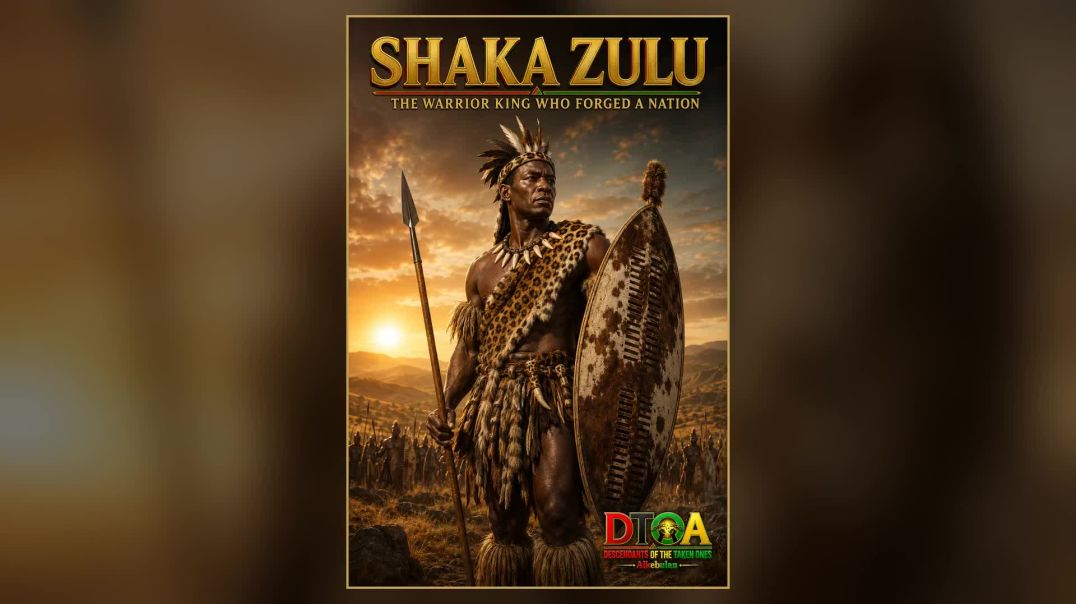
Shaka Zulu The Warrior King Who Forged a Nation
Shaka Zulu The Warrior King Who Forged a Nation
Before the Zulu became one of Africa’s most powerful and widely recognized nations, they were a relatively small clan among many independent communities in southeastern Africa.
Then came Shaka kaSenzangakhona. Born around 1787, Shaka was the son of Zulu chief Senzangakhona and Nandi, a woman whose strength profoundly shaped his life. Because their relationship was considered improper, Shaka and his mother faced rejection, humiliation, and displacement. They eventually found protection among the Mthethwa people, led by Chief Dingiswayo. There, Shaka became a courageous warrior and a gifted military commander. When Senzangakhona died around 1816, Dingiswayo supported Shaka’s claim to leadership of the Zulu.
Shaka inherited a small chiefdom—but he envisioned a nation. He reorganized age-based groups into disciplined military regiments known as amabutho. Warriors lived and trained together, fostering loyalty, unity, and coordinated battlefield strength. Shaka is traditionally credited with refining the use of the short stabbing spear, the iklwa. Unlike a longer spear thrown from a distance, the iklwa was designed for close combat. Warriors used large shields to hook or push an opponent’s shield aside before striking.
His armies became famous for the “horns of the buffalo” formation: the chest confronted and held the enemy, the horns moved around both flanks to surround it, and the loins remained behind as a reserve force. Although Shaka built upon military practices already present in southern Africa, he organized and employed them with extraordinary discipline and effectiveness. His power did not depend entirely on warfare. Shaka also used negotiation, alliances, patronage, and incorporation. Some communities were conquered, while others joined him or retained their leaders under Zulu authority. In little more than a decade, he brought numerous chiefdoms into a centralized kingdom with a common military and political identity.
The name “Zulu” became the name of a nation. Shaka’s rise occurred during the era known as the Mfecane or Difaqane—a period of warfare, migration, and political upheaval across southern Africa. Older histories frequently blamed Shaka almost entirely for this devastation. Modern scholars offer a more nuanced interpretation, pointing to several forces, including regional competition, environmental pressures, trade, warfare among multiple kingdoms, and the expanding influence of European settlers and slave traders.
Shaka was a brilliant nation-builder, but his reign was also severe. He demanded obedience and imposed harsh punishments. Oral traditions recount executions and extreme mourning rituals following the death of his mother, Nandi, in 1827. Some details recorded by later colonial writers may have been exaggerated, but there is little doubt that his rule grew increasingly violent and feared. On September 24, 1828, Shaka was assassinated at KwaDukuza. His half-brothers, Dingane and Mhlangana, participated in the plot, assisted by Mbopha, one of Shaka’s attendants. Dingane subsequently seized the throne.
Shaka ruled for about twelve years, yet the kingdom he forged endured after his death. Decades after his death, the Zulu military system proved its strength against European invasion. At the Battle of Isandlwana in 1879, Zulu forces under King Cetshwayo inflicted one of the British Empire’s most famous defeats—evidence that the national and military foundations consolidated during Shaka’s era remained strong. Shaka Zulu cannot be reduced to either a flawless hero or a bloodthirsty tyrant. Both images erase the complexity of the man and the world he lived in. He was a strategist, warrior, diplomat, and nation-builder whose methods could be both visionary and ruthless. He transformed a small chiefdom into a kingdom whose name endured conquest, colonialism, and apartheid.
In closing
Shaka’s greatest monument is not made of stone. It is the Zulu nation’s continued existence, identity, and pride. Bayede, Nkosi!
Sources: South African History Online, South African Tourism—Shaka kaSenzangakhona
To support the channel, please click the like button and subscribe to receive new videos

![SIZZLA KALONJI --- CHILDREN PROTECTION[ INI BANDS ]KING STURRAGE PROD](https://theblacktube.com/upload/photos/2026/10/141714c0fee7a0458ab096f52a4959513bb44f93RhZWr2uaNfglBM2YsC8v.video_thumb_7651_11.jpeg)
![Singing Sweet - [ONE MAN GIRL] ( King Sturrage Production)INI BANDS RIDDIM](https://theblacktube.com/upload/photos/2026/10/a30f988e6f4f0916f66c75ac24dc31faa7197588O9ZYto8PGtWSfDOEZBPD.video_thumb_4089_11.jpeg)














1 Comments
cliprize
15 days ago