
112 Views· 11/01/26· Black History
The Dogon People and the Mystery of Sirius B

The Dogon People and the Mystery of Sirius B
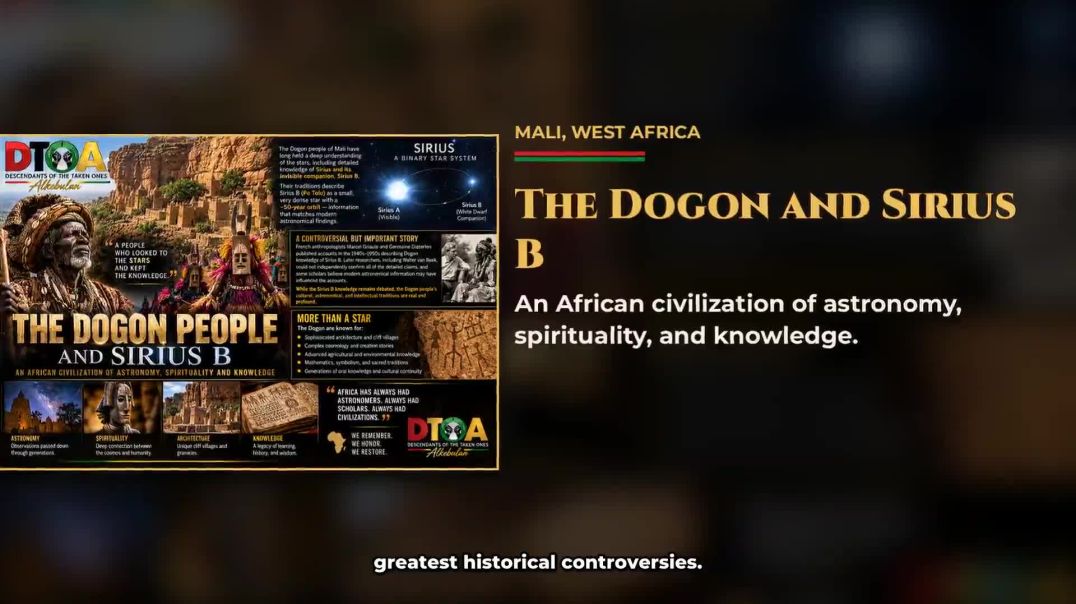
The African civilization whose knowledge of the stars sparked one of astronomy's greatest historical controversies.
High in the cliffs and villages of Mali, West Africa, lives a people whose traditions have captivated astronomers, anthropologists, historians, and scholars around the world. They are the Dogon people, guardians of a remarkable cultural heritage spanning architecture, spiritual traditions, cosmology, and ancestral knowledge.
Dogon village under the Bandiagara Cliffs, Mali
Mali: In Dogon Country - LOUIS MONTROSE PHOTOGRAPHY
An artist's impression of Sirius A and B | ESA/Hubble
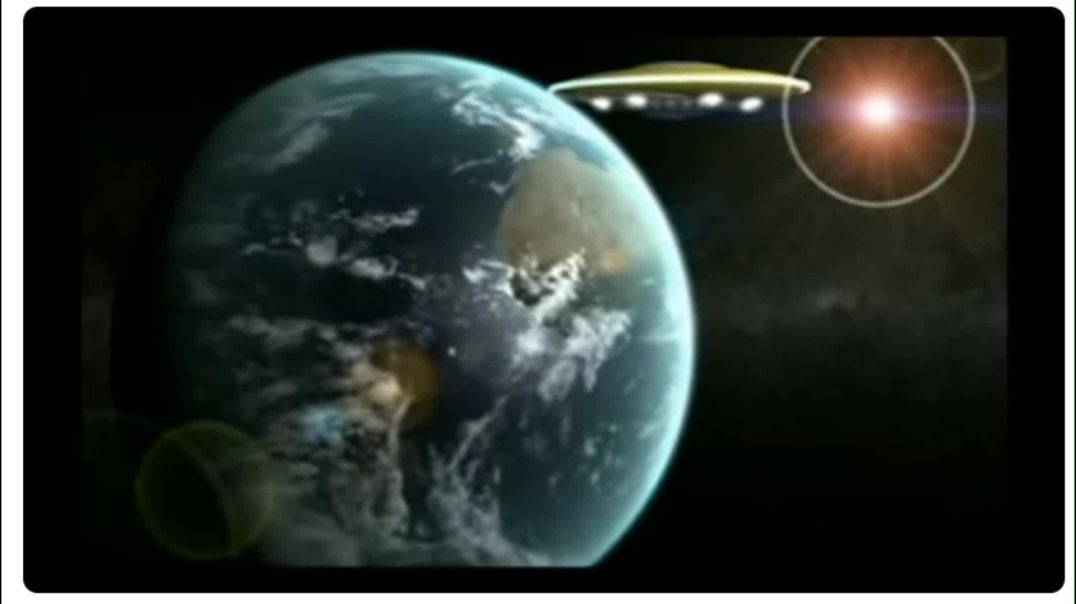
Their most famous astronomical story centers on Sirius, the brightest star in Earth's night sky, and its nearly invisible companion, Sirius B. In 1950, French anthropologists Marcel Griaule and Germaine Dieterlen published an account of Dogon traditions that described a star called Po Tolo, which they associated with Sirius B.
According to their interpretation, Dogon religious knowledge included descriptions of an unseen companion star, its unusual properties, and an orbital period of about 50 years. But here is what makes the story extraordinary. In 1844, European astronomer Friedrich Bessel predicted the existence of Sirius's invisible companion. In 1844, American telescope maker Alvan Clark first observed Sirius B.
Sirius B is a white dwarf, extraordinarily dense and difficult to observe because of the brilliance of Sirius A. How could this astronomical information appear in the traditions of an African society without modern telescopes? That question helped make the Dogon famous throughout the world. However, there is an important historical distinction: Griaule and Dieterlen's findings remain disputed. Later anthropologist Walter van Beek could not independently confirm the detailed Sirius traditions described in their research. Scholars have proposed that modern astronomical information may have entered the accounts through cultural contact or through the research process itself.
This means the claim that the Dogon discovered Sirius B before modern astronomy has not been established as historical fact. But the Dogon people do not need an unproven astronomical discovery to prove their importance. Their knowledge systems reflect generations of observation, oral transmission, ritual practice, environmental understanding, architecture, and cultural continuity.
Their civilization reminds us that African history extends beyond enslavement, colonization, or European exploration. Africa has always been a continent of thinkers, builders, observers, philosophers, and keepers of knowledge. The story of Sirius B should inspire curiosity rather than compel us to turn uncertainty into certainty. The real question is not whether every extraordinary claim about the Dogon is true. It is whether we are willing to study African knowledge with the same seriousness and respect afforded to the intellectual traditions of other civilizations.
Descendants of the Taken Ones: The Dogon deserve to be remembered for what their ancestors preserved, what their communities continue to practice, and the questions their history raises about knowledge and cultural interpretation. We remember the knowledge. We honor the ancestors. We restore the history. Thank you for your time. To support the channel. Please like, share, and subscribe, and pass this along to your family and friends. Remember: information kept to yourself is lost over time, but shared information becomes enduring knowledge. People who lose control of their history can be led to believe they never contributed anything.
#dogonpeople #siriusb #africanastronomy #africanhistory #mali #ancientafricancivilizations #blackhistory #dto #descendantsofthetakenones #AfricanHeritage

















0 Comments