
60 Views· 09/27/26· Black History
The Mutapa Empire: Africa’s Kingdom of Gold
The Mutapa Empire: Africa’s Kingdom of Gold
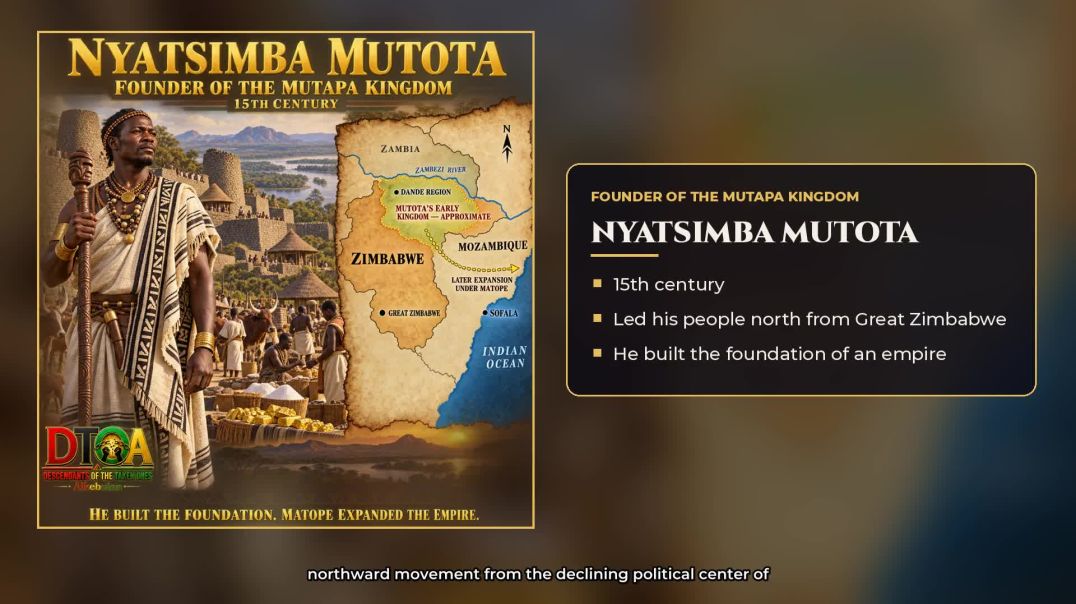
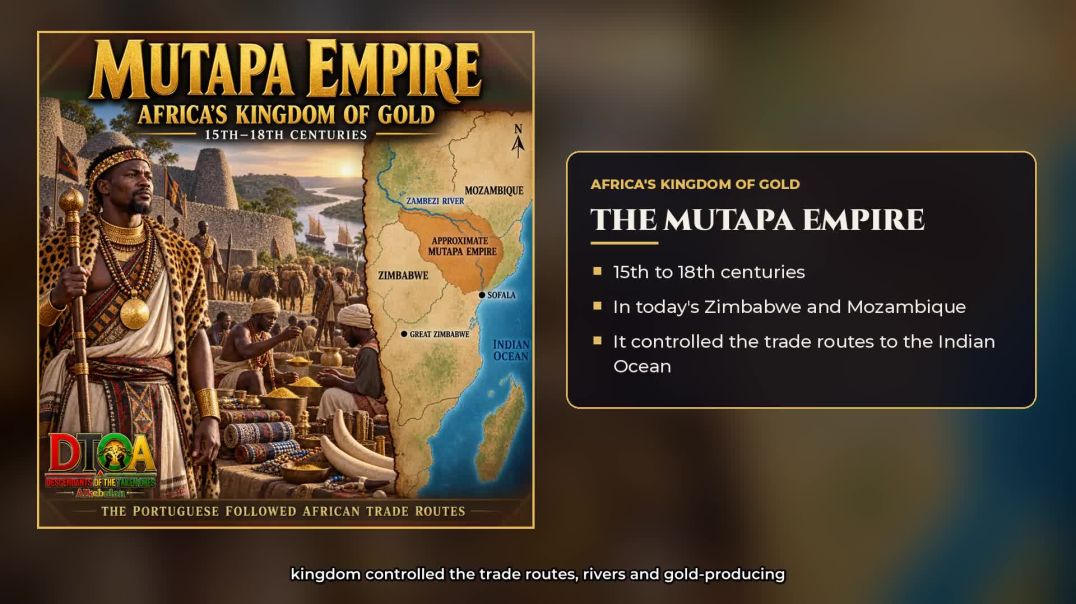
Centuries before European colonial rule, a powerful African kingdom controlled the trade routes, rivers, and gold-producing regions linking southern Africa’s interior to the Indian Ocean. It was the Kingdom of Mutapa. The kingdom emerged in the 15th century in territory now divided between Zimbabwe and Mozambique. According to oral traditions, its founder was Nyatsimba Mutota, a ruler associated with the political world that developed after Great Zimbabwe. The ruler held the title Mwene Mutapa, meaning “lord of the conquered lands.” Europeans later transformed this title into “Monomotapa” and mistakenly used it as though it were the name of a person or a legendary golden kingdom.
Mutapa’s power stemmed from its control of land, people, and commerce. Its territory linked the gold-producing interior to trading communities along the Zambezi River and the East African coast. African merchants traded gold and ivory for imported cloth, ceramics, glass beads, and other goods carried via Indian Ocean trade networks.
This region was not introduced to international commerce by Europeans. African and Swahili merchants had already linked the interior to the wider Indian Ocean world. When the Portuguese reached southeastern Africa at the end of the 15th century, stories of Mutapa’s gold immediately caught their attention. They established trading stations and sought to control the routes carrying gold from the interior to the coast.
Portuguese merchants, soldiers, and missionaries gradually became involved in Mutapa’s politics. They supported rival claimants to the throne, demanded commercial privileges, and exploited internal disputes to increase their influence. In 1629, Portuguese military intervention helped place Mavura Mhande on the throne. The resulting agreements weakened Mutapa’s independence and expanded Portuguese access to land, trade, and mineral resources.
But Mutapa did not disappear immediately. Different branches of the royal state continued to operate, resisting and reorganizing for generations. Its political power shifted as internal conflicts, Portuguese pressure, and the rise of the Rozvi Empire reshaped the region. The kingdom’s history extended beyond the 17th century, although its greatest territorial influence was largely confined to the period between the 1400s and 1600s.
Mutapa demonstrates that precolonial southern Africa had organized governments, royal courts, regional armies, and far-reaching commercial networks. The Portuguese did not discover African gold. They followed African trade routes to it. They did not introduce government to the region.
They encountered an African state powerful enough to negotiate, resist, and survive centuries of political change.
We are the Descendants of the Taken Ones, and we remember the African kingdoms that controlled their own land, wealth and international commerce long before European conquest. Thank you for your time. To support the channel. Please like, share, and subscribe, and pass this along to your family and friends. Remember: information kept to yourself is lost over time, but shared information becomes enduring knowledge. People who lose control of their history can be led to believe they never contributed anything.
















2 Comments
cliprize
15 days agoJOSEPH ELISHA
20 days ago