
34 Views· 11/04/26· Black History
W. E. B. DU BOIS: THE SCHOLAR WHO DEMANDED EQUALITY—AND FACED FEDERAL PROSECUTION

W. E. B. DU BOIS: THE SCHOLAR WHO DEMANDED EQUALITY—AND FACED FEDERAL PROSECUTION
Descendants of the Taken Ones
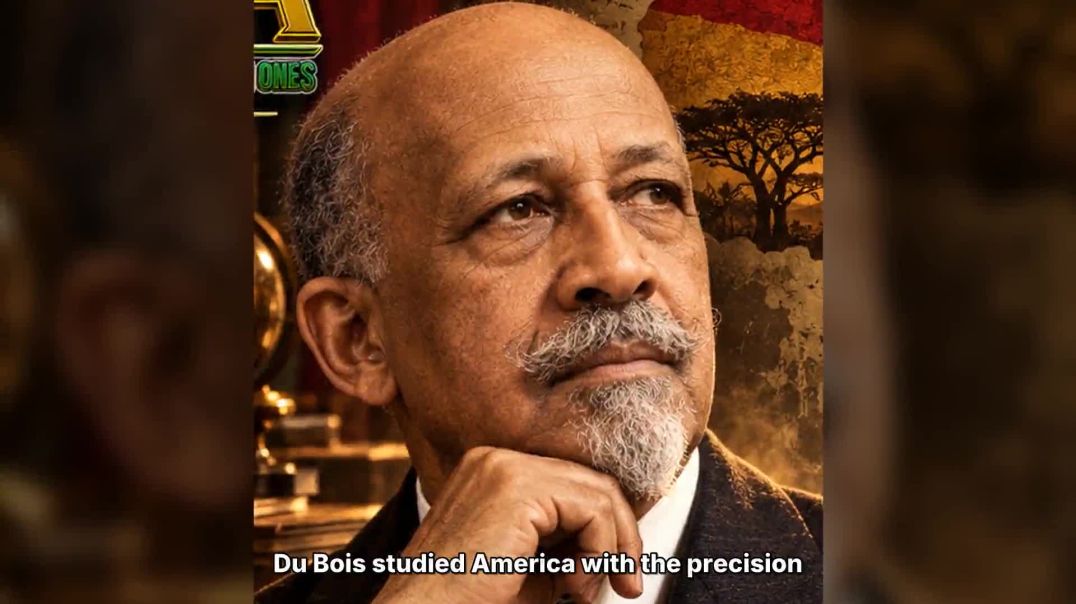
W. E. B. Du Bois studied America with the precision of a scholar and challenged it with the resolve of a man who refused second-class citizenship. He documented Black achievement, exposed racial inequality, helped build a national civil rights organization, and linked the struggle of African Americans to the freedom of African peoples worldwide.
His achievements did not shield him from government scrutiny. Late in life, his peace activism led to federal prosecution. Born William Edward Burghardt Du Bois on February 23, 1868, in Great Barrington, Massachusetts, he entered a world where slavery had ended but racial equality remained an unfulfilled promise. He attended Fisk University in Nashville, where his experiences in the South deepened his understanding of segregation and poverty. He continued his education at Harvard and studied in Berlin. In 1895, he became the first African American to earn a doctorate from Harvard University.
He used research to challenge the stories America told about Black people.
Published in 1899, The Philadelphia Negro examined Black life through detailed social investigation. Du Bois studied employment, housing, education, and community conditions, challenging explanations that framed racial inequality as evidence of Black inferiority. His work directed attention to discrimination, limited opportunities, and the conditions shaping people’s lives.
In The Souls of Black Folk, published in 1903, he explored the psychological burden of being Black in a society that devalued Black identity. His discussion of “double consciousness” described the tension between self-understanding and confronting a hostile society’s judgment.
He gave voice to an experience many people knew intimately: having your humanity measured by someone else’s prejudice. Du Bois also challenged the notion that Black Americans should postpone demands for political and civil rights. He sharply disagreed with Booker T. Washington’s approach, insisting on voting rights, higher education, and full citizenship.
In 1905, he helped organize the Niagara Movement. In 1909, he became a co-founder of the NAACP. As editor of its magazine, The Crisis, he exposed racial violence, advocated equality, and provided a platform for Black writers and artists. He understood that people needed institutions to organize, publish, and defend their rights.
His vision reached beyond the United States.
Du Bois became a leading figure in Pan-Africanism, supporting connections among people of African descent and opposing colonial domination. He saw links between racial oppression in America and the exploitation of African peoples abroad. Over time, his politics moved further left. He criticized capitalism and imperialism, supported socialism, and eventually joined the Communist Party USA in 1961. These commitments belong in an honest account of his life. They also do not excuse government misconduct or make every allegation against him true.
In 1951, the federal government prosecuted the 83-year-old scholar.
The case concerned the Peace Information Center, an organization he chaired that circulated an international appeal against nuclear weapons. Authorities alleged that the center acted as an agent of a foreign principal and should have registered under the Foreign Agents Registration Act. Du Bois and his co-defendants disputed the accusation. The prosecution failed to establish its case. The judge acquitted the defendants without requiring the defense to present its evidence.
The distinction is essential: Du Bois faced prosecution, but he was not convicted.
Nevertheless, acquittal could not erase the burden of being accused. The case subjected an elderly scholar to public suspicion and legal expenses during an era when allegations of communist connections could damage careers and isolate people from former supporters.
Du Bois also faced FBI surveillance and restrictions on his ability to travel abroad. His experience demonstrates how political beliefs and international associations could subject a Black intellectual who challenged American policy to intense scrutiny.
Peace advocacy, by itself, did not establish that he served a foreign government. The prosecution had to prove its allegation but failed.
He continued working.
In 1961, Du Bois moved to Ghana at the invitation of President Kwame Nkrumah to work on the Encyclopedia Africana, a project intended to place African history and knowledge at the center of scholarly attention.
He died in Accra on August 27, 1963, one day before the March on Washington. His life spanned the aftermath of American slavery, the era of African independence, and the modern civil rights movement.
For Descendants of the Taken Ones, Du Bois’s legacy rests on that extraordinary reach: scholarship, institution building, journalism, political struggle, and an enduring insistence that people of African descent have the right to define themselves. His history also demands careful judgment. We can critically examine his political choices while recognizing his achievements and insisting that government accusations be supported by evidence.
W. E. B. Du Bois devoted his life to making Black humanity impossible to dismiss. His prosecution reminds us that intellectual achievement offers no automatic protection when dissent becomes grounds for suspicion. Thank you for your time. To support the channel. Please like, share, and subscribe, and pass this along to your family and friends. Remember: information kept to yourself is lost over time, but shared information becomes enduring knowledge. People who lose control of their history can be led to believe they never contributed anything.
#webdubois #dtoa #descendantsofthetakenones #alkebulan #blackhistory #blackscholars #civilrights #naacp #thecrisis #thesoulsofblackfolk #panafricanism #africandiaspora #fbisurveillance #freedomofexpression #KnowYourHistory










0 Comments