
30 Views· 10/08/26· Black History
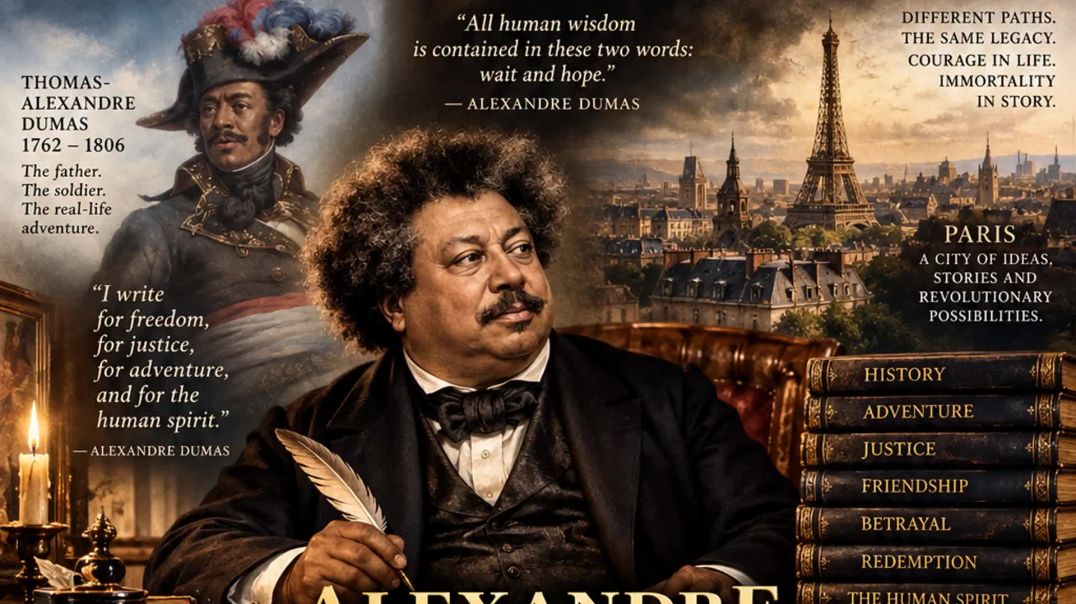
ALEXANDRE DUMAS — THE SON WHO TURNED HIS FATHER’S LIFE INTO LEGEND

ALEXANDRE DUMAS — THE SON WHO TURNED HIS FATHER’S LIFE INTO LEGEND
Before the world knew The Three Musketeers…
Before readers followed Edmond Dantès through betrayal, imprisonment, escape, and revenge in The Count of Monte Cristo…
There was a young boy growing up in France with the memory of an extraordinary father.
His name was Alexandre Dumas.
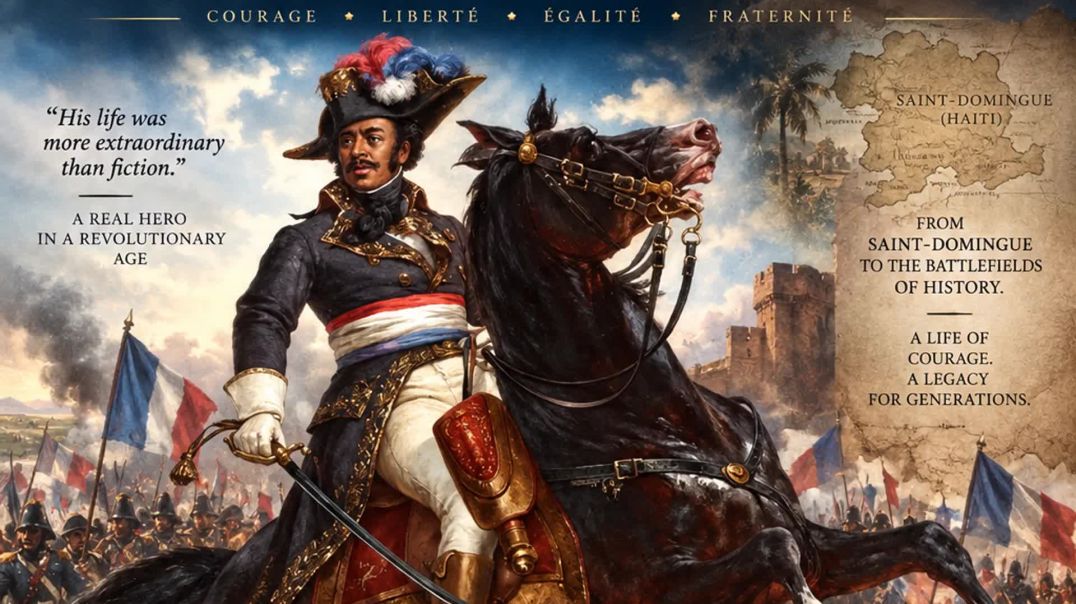
Born in 1802, Dumas was only a small child when his father, General Thomas-Alexandre Dumas, died in 1806. But the general’s life never disappeared from the family story.
His father had been born in Saint-Domingue to a French nobleman and an enslaved Black woman. He rose from slavery to become one of the highest-ranking Black military commanders in revolutionary France, fought across Europe and Egypt, clashed with Napoleon, endured imprisonment, and returned home with his health destroyed. The younger Dumas grew up knowing that his father had been a celebrated hero—and that the family had also suffered after Napoleon’s rise. Smithsonian Magazine
Those memories became part of the emotional world of Alexandre Dumas.
THE SON PICKED UP A PEN
Instead of commanding armies, Alexandre Dumas conquered another world:
literature.
He became a novelist, playwright, journalist, and one of the most popular writers of the 19th century.
His stories were filled with men and women confronting betrayal, corruption, political power, imprisonment, friendship, loyalty, revenge, and redemption.
Those themes were not accidental.
Historian Tom Reiss argues that Dumas’s father’s experiences formed a major emotional foundation for The Count of Monte Cristo, especially its themes of betrayal, imprisonment, injustice, revenge, and memory. Smithsonian Magazine
Think about that. Thomas-Alexandre Dumas had been imprisoned in southern Italy after leaving Napoleon’s Egyptian expedition. Decades later, his son created Edmond Dantès, a man unjustly imprisoned, stripped of his future, and ultimately transformed by captivity.
The novel was fiction. But some of its deepest emotions came from real family history. Smithsonian Magazine
THE BOOKS THAT MADE HIM IMMORTAL
Alexandre Dumas produced an enormous body of work, often collaborating with other writers and researchers, but several titles became global classics.
The Three Musketeers introduced generations of readers to d’Artagnan, Athos, Porthos, and Aramis, turning loyalty, friendship, political intrigue, and swordsmanship into one of literature’s most enduring adventure stories.
Its sequels included Twenty Years After and The Vicomte de Bragelonne, the latter containing the famous story associated with The Man in the Iron Mask.
Then came one of his greatest achievements:
THE COUNT OF MONTE CRISTO
The story follows Edmond Dantès, a young sailor betrayed by jealous enemies and imprisoned without trial.
He loses his freedom.
His future.
The woman he loves.
Years later, he escapes, discovers an enormous fortune, reinvents himself as the mysterious Count of Monte Cristo, and systematically confronts the people who destroyed his life.
But Dumas makes the story larger than revenge.
It becomes a meditation on justice, obsession, suffering, mercy, and what happens when a wounded man gains enough power to act as judge over everyone who wronged him.
Smithsonian notes that the novel’s plot had multiple inspirations, including the historical story of François Picaud, but the moral and psychological dimensions of the Count have also been strongly connected to Dumas’s memories of his father. Smithsonian Magazine
That connection changes how we read the novel.
The imprisonment was fictional.
The pain behind it was not.
MORE THAN TWO BOOKS
Dumas also wrote works including:
The Black Tulip, a story of political turmoil, competition, love, and obsession.
Queen Margot, centered on royal politics, religious violence, survival, and intrigue in 16th-century France.
The Queen’s Necklace, part of his historical fiction examining the French monarchy and the scandalous political world preceding the Revolution.
And many more plays, novels, travel writings, histories, and serialized adventures.
Dumas was not simply successful.
He became an international literary phenomenon.
His characters crossed borders.
His books crossed languages.
His stories survived generations.
And they continue to be adapted into films, television programs, stage productions, comics, and other media more than a century after his death.
BUT THERE WAS SOMETHING ELSE THE WORLD COULD NOT ERASE
Alexandre Dumas was a man of African ancestry writing at the center of European literary culture.
He encountered racism during his lifetime.
Yet his work became part of the literary canon of France and eventually the world.
That makes the Dumas family story remarkable across two generations.
The father broke barriers with a sword.
The son broke barriers with a pen.
Thomas-Alexandre Dumas became a general.
Alexandre Dumas became one of the most famous writers on Earth.
One commanded armies.
The other commanded imaginations.
And the experiences of the father helped provide emotional fuel for the stories of the son. Smithsonian Magazine
DESCENDANTS OF THE TAKEN ONES
This is why the story cannot end with The Three Musketeers.
It cannot end with The Count of Monte Cristo.
We must ask:
Who wrote them?
And then:
Who was his father?
Because behind one of France’s greatest literary names stands the descendant of an enslaved Black woman from Saint-Domingue.
Her son became a general.
Her grandson became a literary giant.
That is lineage.
That is survival.
That is history.
ALEXANDRE DUMAS
1802–1870
Novelist.
Playwright.
Historian.
Storyteller.
Author of:
The Three Musketeers
The Count of Monte Cristo
Twenty Years After
The Vicomte de Bragelonne
The Black Tulip
Queen Margot
The Queen’s Necklace
Descendants of the Taken Ones: remember that his father lived an extraordinary adventure. His extraordinary life helped shape one of the greatest literary legacies in Western history. France’s greatest literary names descend from an enslaved Black woman from Saint-Domingue, and his name should always be remembered. Alexandre Dumas turned the spirit of that life into stories the world still reads. Thomas-Alexandre Dumas lived the legend. Alexandre Dumas wrote it into immortality.
Thank you for your time. To support the channel. Please like, share, and subscribe, and pass this along to your family and friends. Remember: information kept to yourself is lost over time, but shared information becomes enduring knowledge. People who lose control of their history can be led to believe they never contributed anything.
Thank you for your time. To support the channel. Please like, share, and subscribe, and pass this along to your family and friends. Remember: information kept to yourself is lost over time, but shared information becomes enduring knowledge. People who lose control of their history can be led to believe they never contributed anything.



















0 Comments