
50 Views· 10/23/26· Black History
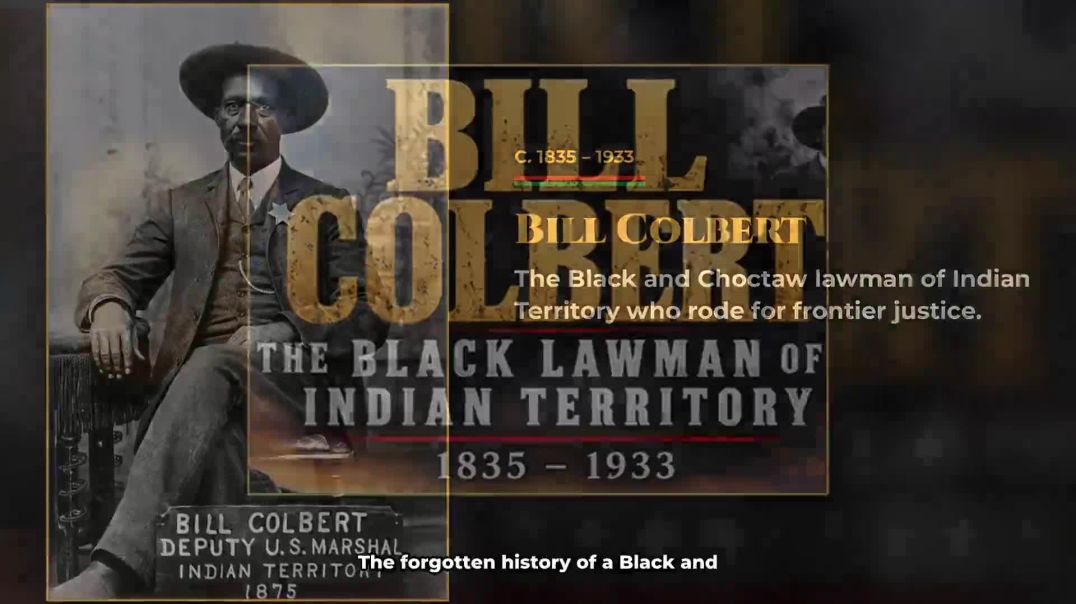
Bill Colbert (c. 1835–1933): The Black Lawman of Indian Territory Who Helped Bring Justice to the Am
Bill Colbert (c. 1835–1933): The Black Lawman of Indian Territory Who Helped Bring Justice to the American Frontier. The forgotten history of a Black and Choctaw frontier lawman who pursued dangerous outlaws during the era of Judge Isaac C. Parker and Bass Reeves.
Name: William “Bill” Colbert Reported lifespan: 1835–1933 Ancestry: African and Choctaw Occupation: Frontier lawman and federal posseman Territory: Indian Territory, present-day Oklahoma Associated locations: Fort Smith, Arkansas, and Atoka, Choctaw Nation
1. The Black Lawman History Almost Forgot When America tells the story of the Wild West, familiar names dominate: Wyatt Earp, Wild Bill Hickok, and other white frontier lawmen. But the history of the American frontier was never exclusively white. Black cowboys, Native American scouts, formerly enslaved people, and Black law enforcement officers played essential roles in shaping the West.
Among those whose contributions have received far less recognition was William “Bill” Colbert, a Black man of Choctaw ancestry who worked in Indian Territory. Colbert pursued fugitives, assisted federal marshals, and operated in some of the frontier's most dangerous parts. His story reveals an America seldom portrayed in Western movies: Black men carrying out federal law enforcement duties in territories where slavery, Indigenous sovereignty, racial discrimination, and American expansion intersected. Colbert became associated with some of the best-known lawmen of his era, including the legendary Bass Reeves.
2. African and Choctaw Roots Bill Colbert was reportedly born around 1835, long before the Civil War ended slavery in the United States. Accounts describe him as having African and Choctaw ancestry. This distinction is historically important. Slavery existed not only in the southern United States but also within several Native American nations. The Choctaw Nation was among those whose members held enslaved African people. After emancipation, Black people and their descendants within these nations became known as Indian Freedmen Colbert's knowledge of Choctaw language, customs, and territory reportedly made him particularly valuable to federal law enforcement. He could navigate communities and landscapes unfamiliar to many officers arriving from outside Indian Territory.
3. Serving Under Judge Isaac C. Parker
Judge Isaac Charles Parker Known as the “Hanging Judge,” Parker presided over the federal court in Fort Smith, Arkansas, beginning in 1875. His court exercised extensive jurisdiction over crimes committed in Indian Territory. In the latter nineteenth century, Indian Territory was a complex jurisdictional landscape. Federal authorities pursued fugitives accused of crimes within United States jurisdiction. Long distances and limited transportation made the work difficult. Colbert became part of the network of Black frontier lawmen working in this environment. Some popular biographies state that Judge Parker commissioned him as a deputy United States marshal in March 1875. However, historian Art T. Burton distinguishes Colbert's career from that of formally commissioned deputies. Burton's research identifies him as a federal posseman who assisted marshals for more than twenty years, rather than a formally commissioned deputy. Bill Colbert performed dangerous law enforcement work in Indian Territory. His precise federal title remains disputed.
4. The Encounter with Bill Alexander September 1891 One of the most frequently recounted episodes in Colbert's career occurred on September 24, 1891. According to later historical accounts, Colbert attempted to arrest Bill Alexander, who was wanted for murder. Alexander reportedly resisted arrest. The confrontation turned deadly, and Colbert shot and killed him. For frontier officers, an arrest could turn violent in seconds. Unlike modern law enforcement agencies with radios, helicopters, and coordinated emergency response systems, nineteenth-century officers often traveled long distances with limited support. A lawman pursuing a dangerous suspect might find himself isolated for hours or days. Colbert survived the encounter, and his reputation as a formidable lawman continued to grow. Legends of America
5. The Killing of Jackson Fletcher, March 1894. On March 11, 1894, another confrontation reportedly ended in gunfire. This time, the suspect was Jackson Fletcher, described in historical accounts as a Choctaw outlaw involved in illegal liquor activity. Colbert attempted to arrest Fletcher, who reportedly resisted. The encounter ended with Fletcher's death. The incident became another episode associated with Colbert's reputation for forceful frontier enforcement. Popular accounts describe Colbert as having killed 21 men while performing law enforcement duties. Secondary histories repeat that number, but the available documentation does not independently establish the circumstances of all 21 deaths. It should therefore be treated as a historical claim, not a verified total.
6. Riding with Bass Reeves Against the Christian Gang
One of the most compelling accounts of Colbert's career links him to Bass Reeves. Reeves was among the most celebrated Black deputy United States marshals in American history. In the 1890s, authorities pursued the Christian brothers, members of an outlaw gang linked to violent crimes, including the killing of an Oklahoma City police chief. According to historical accounts, Colbert joined Reeves and other lawmen in a pursuit of the gang. The officers reportedly failed to locate the Christian brothers but encountered two other fugitives, Will Stevenson and Dick Sanger. Gunfire erupted. Stevenson was killed, while Sanger was captured and later executed. These events illustrate the dangerous responsibilities Black frontier lawmen undertook during an era when many American institutions denied Black citizens equal treatment. The broader episode appears in published historical accounts, though details of each officer's actions are not equally documented.
7. The 1901 Pursuit of Scar-Faced Jim. A remarkable piece of surviving contemporary evidence links Colbert to another frontier manhunt. A September 1901 report in The Norman Transcript, preserved by the Oklahoma Historical Society, described the pursuit of an outlaw known as Scar-Faced Jim. Deputy marshals searching for the fugitive brought Bill Colbert along to help identify him. The officers tracked the fugitive, set an ambush, and relied on Colbert's identification when their target approached. The outlaw was killed during the encounter. This newspaper account is particularly important because it shows that Colbert's involvement in frontier law enforcement was documented during his lifetime, rather than appearing exclusively in later Western folklore.
Gateway to Oklahoma History
8. The Controversy of 1908
Colbert's life also included controversy. According to later historical summaries, he was arrested in McAlester, Oklahoma, on December 11, 1908, in connection with a robbery. The available accounts do not establish that he was convicted. He reportedly continued to live in the Atoka area afterward. Including this incident is important because preserving history requires examining difficult facts alongside achievements. The purpose of recovering Black history is not to create flawless legends. It is to recognize the full lives and documented contributions of people whose stories have often been neglected.
Legends of America
9. Death and the Forgotten Black Lawmen of the American West. Bill Colbert reportedly died in Atoka, Oklahoma, in 1933, at about 98 years of age. For decades, Black participation in frontier law enforcement received far less public attention than the exploits of white marshals and gunfighters. Colbert was not alone. Other Black lawmen included Bass Reeves, Grant Johnson, Robert Fortune, Rufus Cannon, and Bynum Colbert. Importantly, Bynum Colbert and Bill Colbert were different individuals. Historian Art T. Burton notes that he found no evidence establishing a family relationship between them.
Their careers demonstrate that Black Americans helped establish and enforce the legal systems in the western territories, despite the discrimination they faced.
10. Descendants of the Taken Ones Message: Reclaiming the Black American West. For generations, Hollywood portrayed the American frontier as a place where white cowboys rode across open plains and white marshals brought criminals to justice, while Black Americans were largely absent. Yet the historical record tells a more complicated story. Black Americans rode those same trails.
They tracked fugitives.
They confronted armed outlaws and helped enforce federal law, and some did so while living under racial discrimination. Bill Colbert's life deserves attention because it challenges the narrow image of who shaped the American West. He was a Black man of African and Choctaw ancestry whose knowledge, experience, and courage made him a recognized participant in frontier law enforcement. His record was not without controversy, and some popular claims about his exploits require further verification. Yet his place in that history cannot be erased. The American West was never built by one race. Its history belongs to the Black, Native American, Hispanic, Asian, and white men and women whose lives shaped it. And Bill Colbert was part of that story. They showed us the Western heroes they wanted us to remember. Now we must recover the people history left behind.
Descendants of the Taken Ones Know the history. Honor the ancestors. Preserve the legacy. Thank you for your time. To support the channel. Please like, share, and subscribe, and pass this along to your family and friends. Remember: information kept to yourself is lost over time, but shared information becomes enduring knowledge. People who lose control of their history can be led to believe they never contributed anything.
Historical references
• National Park Service — Art T. Burton's research distinguishing Bill and Bynum Colbert
• Oklahoma Historical Society — The Norman Transcript, September 1901
• Legends of America — Bill Colbert historical biography
• Oklahoma State University — Research on Black frontier lawmen












0 Comments