
273 Views· 09/11/26· Black History
The 1921 Tulsa Race Massacre of Black Wall Street

The 1921 Tulsa Race Massacre of Black Wall Street
Black Wall Street: A Symbol of Black Excellence
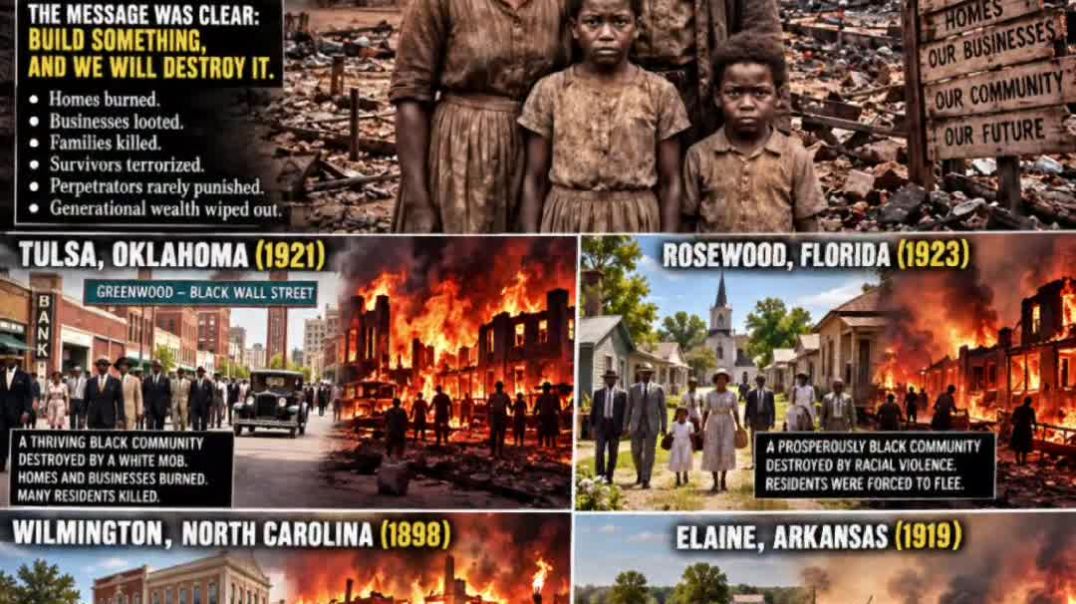
In the early 1900s, the Greenwood District of Tulsa, Oklahoma, became one of the most prosperous Black communities in the United States. Because of its wealth, thriving businesses, and spirit of self-reliance, Booker T. Washington called it "Negro Wall Street," a name later remembered as Black Wall Street.
By 1921, Greenwood was home to:
• More than 300 Black-owned businesses
• Luxury homes, hotels, restaurants, grocery stores, and doctor's offices
• Two newspapers, schools, churches, and a hospital
• Successful attorneys, teachers, entrepreneurs, and oil industry professionals
The community represented something powerful: economic independence and Black self-determination in the era of segregation.
________________________________________
The Spark
On 30 May 1921, a young Black shoe shiner named Dick Rowland entered an elevator operated by a young white woman, Sarah Page. Something happened inside the elevator—whether Rowland stumbled, tripped, or accidentally touched Page remains unknown.
Although Page declined to press charges, rumors spread quickly. Newspapers published inflammatory stories, and white mobs gathered outside the courthouse demanding that Rowland be lynched.
Armed Black World War I veterans came to the courthouse to protect Rowland from mob violence. During a confrontation, a shot was fired. Chaos erupted.
________________________________________
The Attack on Greenwood
Beginning on the night of 31 May and continuing into 1 June 1921, thousands of white rioters invaded Greenwood.
They:
• Looted homes and businesses.
• Set entire blocks on fire.
• Shot residents attempting to flee.
• Arrested Black survivors and placed them in detention camps.
By the end of the attack:
• Approximately 35 square blocks were destroyed.
• More than 1,200 homes and businesses were burned.
• An estimated 10,000 Black residents became homeless.
• Historians estimate that 100 to 300 people were killed, though the true number may never be known.
________________________________________
The First American City Bombed from the Air
One of the most shocking aspects of the Tulsa Race Massacre was the use of private airplanes during the assault on Greenwood.
Eyewitnesses reported that aircraft flew over the district and dropped incendiary materials while also firing upon residents below. Modern historical investigations have concluded that planes were indeed used during the attack.
Because of these aerial attacks, many historians describe Tulsa as the first American city to be bombed from the air.
However, it is important to note that:
There is no evidence that the United States federal military conducted the bombing or ordered an aerial bombardment of Tulsa. The aircraft involved were privately operated and used by local participants in the massacre.
Nevertheless, Greenwood became the first American community known to have suffered an organized aerial attack during a domestic racial massacre.
________________________________________
The Cover-Up
For decades, the massacre was largely erased from history.
• Insurance companies denied claims.
• No one was convicted.
• Survivors received no compensation.
• The event was omitted from many history books and classrooms.
Only in recent decades has the nation begun to confront the truth about what happened in Tulsa.
________________________________________
In closing
Black Wall Street was proof that a people once enslaved could build extraordinary wealth, institutions, and community despite segregation and oppression. The destruction of Greenwood was not simply an attack on buildings—it was an attack on Black prosperity, independence, and hope.
As Descendants of the Taken Ones (DTOA), we remember the men, women, and children of Greenwood who lost their homes, businesses, and lives. Their story reminds us that economic empowerment, unity, and the preservation of our history are essential to protecting our future.
Black Wall Street was burned, but its spirit was never destroyed. The legacy of Greenwood lives on in every effort to build, educate, create wealth, and preserve the truth of our history.







1 Comments
cliprize
19 days ago