
148 Views· 09/01/26· Re-Education
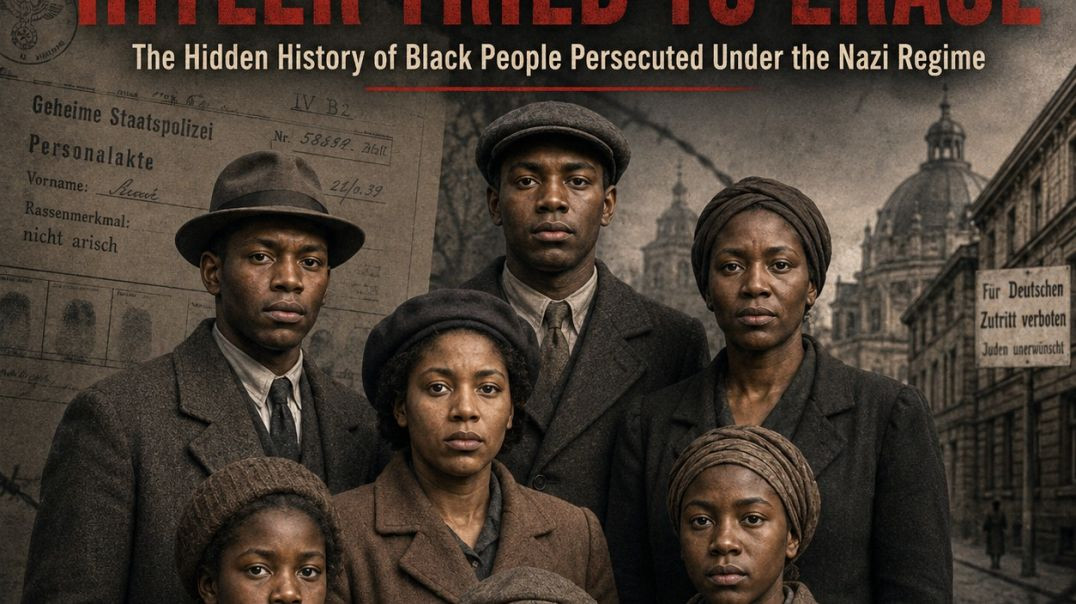
The Black Germans Hitler Tried to Erase

Nazi authorities did not always imprison people under a separate racial category The Black Germans Hitler Tried to Erase
Discover the hidden history of Black Germans persecuted under the Nazi regime—a chapter largely erased from the traditional histories of Nazi Germany and the Holocaust. When Adolf Hitler came to power in 1933, Germany was already home to a small but established Black community. They were German citizens, including students, musicians, actors, sailors, workers, activists, and children. Some descended from Africans who had arrived from Germany’s former colonies; others were children of African soldiers and German women after World War I.
Some accounts estimate that between 20,000 and 25,000 Black and mixed-race people may have lived in Germany during this period. However, historians have not confirmed an exact number. The United States Holocaust Memorial Museum cautiously describes the population in 1933 as “several thousand.” Therefore, the figure of 25,000 should be presented as a high historical estimate—not an established count.
Declared Enemies of the “Aryan Race” Nazi ideology classified Black people as racially inferior and excluded them from Hitler’s vision of a so-called pure Aryan nation. Beginning in 1933, Black Germans lost jobs, educational opportunities, legal protections, and the ability to participate freely in German society. The Nuremberg Race Laws were created primarily to persecute Jewish people, but by the end of 1935, parts of those laws were also applied to Black people and Roma. Black Germans could be denied citizenship rights and prohibited from marrying or having relationships with white Germans. Black children were humiliated during racial-science lessons, expelled from schools, denied apprenticeships, and excluded from Nazi youth organizations. In March 1941, Black children were formally barred from attending German public schools. The Secret Sterilization Campaign. Among the most horrifying Nazi crimes was the secret sterilization of mixed-race children born in Germany’s Rhineland. Many were children of German women and African soldiers who had served in the French occupation forces after World War I. The Nazis labeled these children with the degrading term “Rhineland Bastards.” Hitler described their existence as a racial contamination of Germany. By the end of 1937, Nazi officials and doctors had forcibly sterilized at least 385 Black and mixed-race children and teenagers—often without legal authority. Families were threatened or pressured into signing consent forms. The objective was unmistakable: to prevent another generation of Black Germans from being born. Imprisonment and Murder Unlike the Jewish population, Black Germans were not subjected to a single, centralized program of mass deportation and extermination. That distinction must be clearly recognized. But it does not mean they escaped Nazi persecution. Black people were arrested and confined in prisons, workhouses, psychiatric institutions, forced-labor sites, and concentration camps. Some were subjected to medical abuse, while others were murdered. Among the documented victims were: Hilarius “Lari” Gilges, a Black German performer and Communist activist, was murdered by Nazis in Düsseldorf in 1933. Mahjub bin Adam Mohamed, also known as Bayume Mohamed Husen, was imprisoned and murdered at the Sachsenhausen concentration camp. Martha Ndumbe, a Black German woman, was imprisoned and murdered at Ravensbrück. Ferdinand Allen was forcibly sterilized in 1935 and murdered in 1941 through the Nazi T4 killing program. Gert Schramm was imprisoned at Buchenwald at age 15 and survived. Other Black Germans disappeared into prisons and camps without leaving records. Because identifying them as Black, the full number of victims may never be known. A Community Nearly Erased. The Black German experience under Nazism was not a single story. Some survived by hiding. Some found limited employment as performers in colonial propaganda films. Others relied on white relatives and friends willing to protect them. Many lived every day knowing that a neighbor, teacher, employer, or police officer could expose them. By the end of the Nazi regime, Germany’s developing Black community had been devastated. Families had been separated, careers destroyed, children denied education, and countless people driven into exile, imprisonment, silence, or death. Their history was then overshadowed and neglected for decades. The persecution of Black Germans does not replace or diminish the history of the six million Jewish people murdered during the Holocaust. It expands our understanding of the reach of Nazi racial ideology—and restores Black victims and survivors to a history from which they were too often excluded.
They were descendants of the Taken Ones—recovering the history they tried to erase. They were Germans. They were Black. They were targeted—and their stories deserve to be remembered
Sources: United States Holocaust Memorial Museum, Sheffield Hallam University research on Germany’s Black diaspora



















1 Comments
cliprize
8 days ago