
31 Views· 10/08/26· Black History
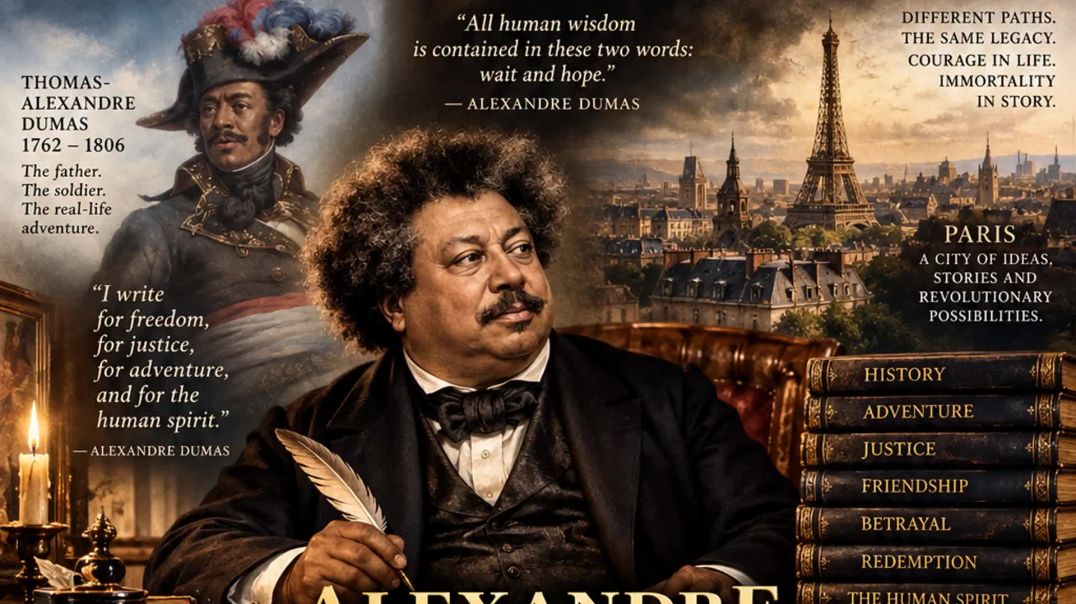
THOMAS-ALEXANDRE DUMAS — BEFORE THE NOVELS CAME THE LEGEND

THOMAS-ALEXANDRE DUMAS — BEFORE THE NOVELS CAME THE LEGEND
Before The Count of Monte Cristo…
Before The Three Musketeers…
Before the name Alexandre Dumas became one of the most famous names in literature…
There was his father.
Thomas-Alexandre Dumas.
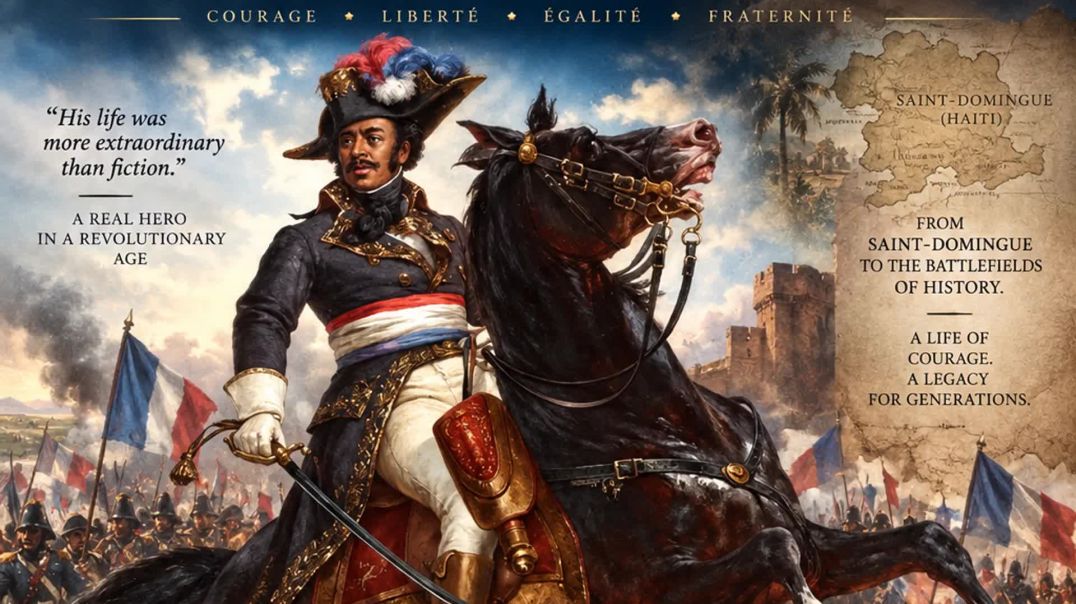
Born in 1762 in Saint-Domingue (present-day Haiti), Thomas-Alexandre was the son of a French nobleman and Marie-Cessette Dumas, an enslaved Black woman. His early life was shaped by slavery, race, status, and the contradictions of the French colonial world. His father later brought him to France and secured his freedom, granting him access to education and society that had been denied to most people of African descent in the 18th century.
But Thomas-Alexandre did not simply inherit a place in society.
He made one.
In 1786, he entered the French military as an enlisted cavalryman and used the surname Dumas, the name of his mother.
Then the French Revolution erupted.
The old social order began to collapse.
And Dumas rose with astonishing speed.
He went from ordinary cavalryman to officer, then brigadier general, and eventually general of division, commanding thousands of troops during the French Revolutionary Wars. Smithsonian describes him as France’s first Black general, an extraordinary achievement in an era when slavery still existed throughout much of the Atlantic world.
His rise was so extraordinary because it came at a narrow moment in history.
The French Revolution proclaimed ideas of liberty, equality, and citizenship, and for a brief period those principles opened doors that had previously been closed to men like Dumas.
He walked through them.
And then he kept climbing.
THE GENERAL THEY COULD NOT IGNORE
Dumas earned a reputation for physical strength, fearlessness, and aggressive battlefield leadership.
He fought in campaigns across Europe and eventually became closely connected to the rise of another ambitious general:
Napoleon Bonaparte.
But the two men were very different.
Napoleon sought power.
Dumas was fiercely attached to republican ideals.
During the Egyptian campaign, Dumas openly questioned whether Napoleon’s ambitions served France or merely Napoleon himself. According to accounts cited by Smithsonian, Dumas argued that the interests of France should come before the interests of any one man.
That disagreement mattered.
Napoleon did not forget challenges easily.
Dumas eventually requested permission to leave Egypt.
On the voyage back to France, his ship was forced into southern Italy, where he was captured and imprisoned by forces hostile to France.
He spent roughly two years in captivity.
His health deteriorated badly.
When he was finally released and returned to France, the political world had changed completely.
Napoleon had seized power.
And the revolutionary promise that had helped make Thomas-Alexandre Dumas possible was disappearing.
THE REVOLUTION TURNED BACKWARD
Napoleon later reinstated slavery in the French colonies and curtailed rights for Black citizens and soldiers.
The man who had once commanded French armies now found himself marginalized.
His health had been damaged.
His career was effectively over.
His family struggled financially.
Thomas-Alexandre Dumas died in 1806, only 44 years old.
But his story did not die with him.
His young son remembered him.
That son was Alexandre Dumas, who would later become one of the world's most celebrated writers. When Alexandre Dumas wrote stories of betrayal, imprisonment, injustice, revenge, courage, escape, and redemption, he did not have to invent those themes from nothing.
He had already seen them in his own family history.
Historians have long connected the life of Thomas-Alexandre Dumas with the emotional foundations of The Count of Monte Cristo.
The son became famous for writing adventure.
The father had actually lived one.
DESCENDANTS OF THE TAKEN ONES
Thomas-Alexandre Dumas forces us to confront a history that does not fit neatly into the stories many of us were taught.
A man born to an enslaved Black woman in the Caribbean became one of the highest-ranking military officers in revolutionary France.
He commanded white European soldiers.
He fought across Europe.
He challenged Napoleon.
He survived imprisonment.
And his extraordinary life helped shape one of the greatest literary legacies in Western history.
Yet most people know the son.
Few know the father.
That is exactly why his name must be remembered.
Descendants of the Taken Ones remember THOMAS-ALEXANDRE DUMAS
1762–1806
Born in Saint-Domingue.
Son of an enslaved Black woman.
Freed in France.
Enlisted as a cavalryman.
Rose to general.
Commanded armies.
Defied Napoleon.
Survived imprisonment.
Inspired a literary dynasty.
Before the novels came the legend. Thank you for your time. To support the channel. Please like, share, and subscribe, and pass this along to your family and friends. Remember: information kept to yourself is lost over time, but shared information becomes enduring knowledge. People who lose control of their history can be led to believe they never contributed anything.
















0 Comments