
230 Views· 09/17/26· Black History
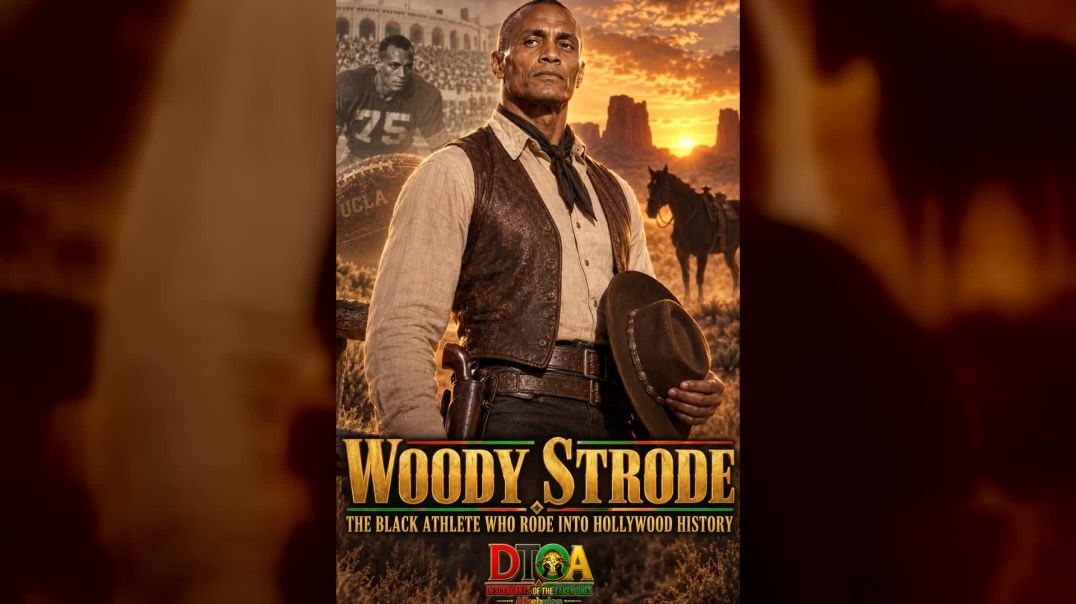
Woody Strode — The Black Athlete Who Broke Barriers From the Football Field to Hollywood
Woody Strode — The Black Athlete Who Broke Barriers From the Football Field to Hollywood
Before Hollywood regularly portrayed Black men as heroes, warriors and Western legends, Woody Strode brought strength, dignity and unmistakable presence to the screen.
Born Woodrow Wilson Woolwine Strode on July 25, 1914, in Los Angeles, California, he developed into an extraordinary six-foot-four athlete. Strode excelled in football, wrestling, track and field, and the decathlon—years before he became internationally recognized as an actor.
At UCLA, Strode played football alongside Kenny Washington, Jackie Robinson and Ray Bartlett. Together, the four Black players became known as the “Gold Dust Gang.” Their presence on the celebrated 1939 UCLA team challenged racial barriers in major college athletics.
During World War II, Strode served in the United States Army Air Forces, working in the Pacific theater and playing football for a military team.
When the war ended, professional football was still enforcing an unwritten racial ban. In 1946, Strode and Kenny Washington joined the Los Angeles Rams, becoming two of the first Black players to reintegrate the modern NFL after Black athletes had been excluded from the league for more than a decade.
Strode later played Canadian football for the Calgary Stampeders, helping the team win the 1948 Grey Cup championship. He also worked as a professional wrestler before finding his greatest fame in motion pictures.
Hollywood initially restricted Strode to stereotypical and minor roles. But his commanding physical presence made him impossible to ignore.
In the 1960 film Spartacus, Strode portrayed Draba, an Ethiopian gladiator forced to fight Spartacus to the death. After defeating Spartacus, Draba refuses to kill him and instead attacks the Roman officials who have reduced the men to entertainment. Although his appearance was brief, Draba’s act of resistance became one of the film’s most memorable moments.
That same year, director John Ford gave Strode the title role in Sergeant Rutledge. Strode played First Sergeant Braxton Rutledge, a respected Buffalo Soldier falsely accused of assaulting and murdering a white woman.
At a time when Black actors were rarely permitted to lead major Westerns, Strode portrayed a disciplined, intelligent and heroic Black cavalryman. The film allowed audiences to see a Black man riding across the screen with the stature traditionally reserved for white stars such as John Wayne.
Strode later appeared in The Man Who Shot Liberty Valance, The Professionals, Once Upon a Time in the West, The Ten Commandments, Pork Chop Hill, Black Jesus, Posse and dozens of other productions. His final film, The Quick and the Dead, was released shortly after his death and dedicated to his memory.
Woody Strode died on December 31, 1994, at the age of 80. In 2021, the National Cowboy & Western Heritage Museum inducted him into its Hall of Great Westerners, recognizing his lasting contribution to the Western genre. National Cowboy & Western Heritage Museum
Woody Strode was never simply an imposing man standing in the background. He was an athlete, soldier, champion and pioneering actor who demanded that Black strength be shown with dignity.
We are the Descendants of the Taken Ones, and we remember Woody Strode—the man who helped reintegrate professional football and rode into Hollywood history as one of cinema’s first great Black Western heroes.



3 Comments
cliprize
6 days agoJOSEPH ELISHA
20 days agoCopuffs843
20 days agoJOSEPH ELISHA
20 days ago