
193 Views· 11/17/26· Black History
Zeta Phi Beta Sorority, Incorporated (ΖΦΒ)

Zeta Phi Beta Sorority, Incorporated (ΖΦΒ)
Founded January 16, 1920 | Howard University | Washington, D.C.
The Five Pearls: Five Black Women Who Built a Legacy of Scholarship, Service, Sisterhood, and Finer Womanhood
The Birth of a Sisterhood During Segregation
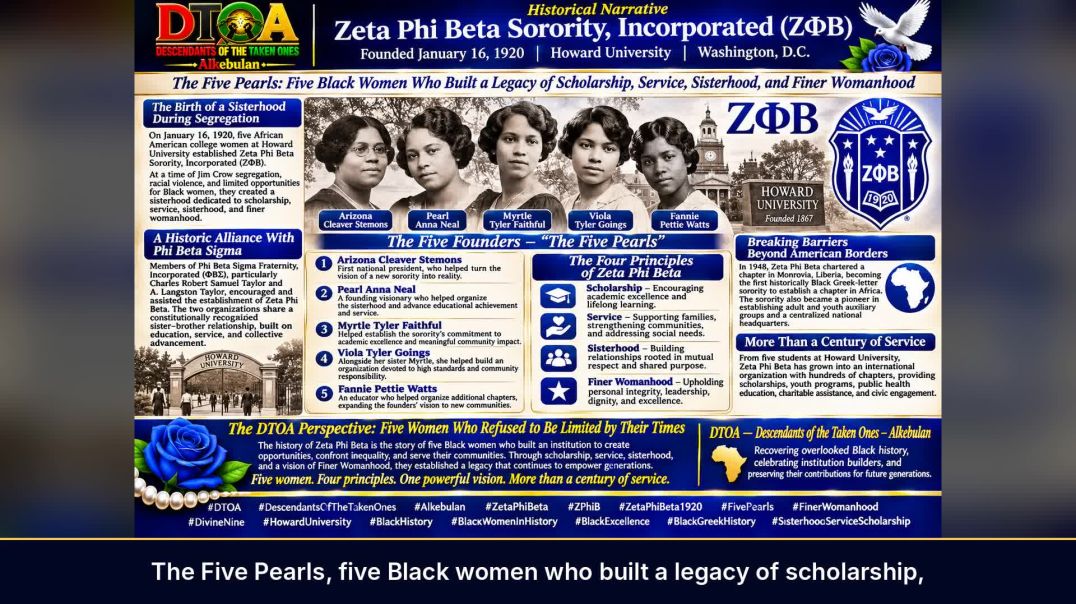
On January 16, 1920, five African American college women at Howard University established Zeta Phi Beta Sorority, Incorporated.
America was experiencing profound racial tensions. Jim Crow segregation controlled much of the South, racial violence threatened Black communities, and Black women continued fighting for educational opportunities and equal rights.
Yet these five women envisioned something greater than a traditional collegiate social organization.
They wanted a sisterhood that would confront poverty, prejudice, educational inequality, and the social conditions affecting Black Americans.
Their founding philosophy was revolutionary in its simplicity: a sorority's value should be measured not merely by its social standing but by its contributions to humanity.
The organization was built upon four principles: Scholarship, Service, Sisterhood, and Finer Womanhood.
Zeta Phi Beta Sorority, Incorporated+1
The Five Pearls: The Women Who Started It All
1. Arizona Cleaver Stemons
The organization's first national president, Arizona Cleaver Stemons, helped turn the vision of a new sorority into reality. Her leadership established the foundation for generations of Zeta women.
2. Pearl Anna Neal
A founding visionary who helped organize the sisterhood, Pearl Anna Neal contributed to an institution that would encourage educational achievement and lifelong service.
3. Myrtle Tyler Faithful
Myrtle Tyler Faithful helped establish the sorority's commitment to academic excellence and meaningful contributions beyond the university campus.
4. Viola Tyler Goings
Alongside her sister Myrtle, Viola Tyler Goings helped establish an organization devoted to high standards, personal integrity, and community responsibility.
5. Fannie Pettie Watts
Fannie Pettie Watts became an educator and helped organize additional Zeta chapters, extending the founders' vision to new communities.
Founders' names and organizational history verified through Zeta Phi Beta's official historical records.
Zeta Phi Beta Sorority, Incorporated+1
A Historic Alliance With Phi Beta Sigma
One distinctive feature of Zeta Phi Beta's history is its relationship with Phi Beta Sigma Fraternity, Incorporated.
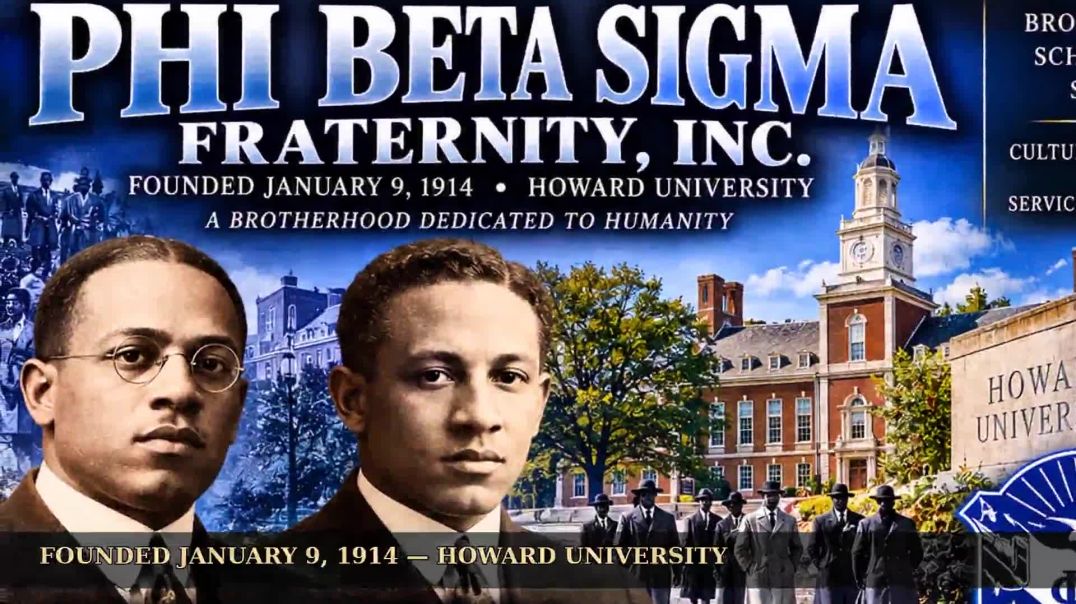
Members of Phi Beta Sigma, particularly Charles Robert Samuel Taylor and A. Langston Taylor, encouraged and helped establish the new sorority.
Zeta Phi Beta and Phi Beta Sigma subsequently established a constitutionally recognized sister-and-brother organizational relationship, distinguishing them within the historically Black Greek-letter community.
Their relationship demonstrated how Black men and women could build cooperating institutions around education, service, and collective advancement.
Breaking Barriers Beyond American Borders
Zeta Phi Beta's founders did not envision an organization limited to Washington, D.C.
They wanted to establish chapters wherever women shared their commitment to scholarship and service.
In 1948, Zeta Phi Beta chartered a chapter in Monrovia, Liberia, becoming the first historically Black Greek-letter sorority to establish a chapter in Africa.
The organization also became a pioneer in establishing adult and youth auxiliary groups and in operating through a centralized national headquarters.
These developments expanded its impact across generations and international boundaries.
Four Principles That Define the Sisterhood
Scholarship
Encouraging academic excellence, intellectual achievement, educational access, and lifelong learning.
Service
Supporting families, strengthening communities, providing educational resources, and confronting social challenges.
Sisterhood
Building relationships rooted in mutual respect, collective responsibility, and shared purpose.
Finer Womanhood
Upholding personal integrity, leadership, dignity, and standards of excellence.
More Than a Century of Community Service
From five students at Howard University, Zeta Phi Beta developed into an international organization with hundreds of chapters.
Its initiatives have included scholarships, youth mentoring, public health education, charitable assistance, and civic engagement.
The sorority also established auxiliary programs designed to extend opportunities for service and development to women and young people outside collegiate membership.
Its history demonstrates the lasting influence of institutions created by African American women during periods of legalized discrimination.
The DTOA Perspective: Five Women Who Refused to Be Limited by Their Times
The history of Zeta Phi Beta is not simply the story of a sorority founded on a college campus.
It is the story of five Black women who looked at an unequal society and decided to build an institution to create opportunities for others.
At a time when segregation restricted Black Americans' access to education, employment, political representation, and economic opportunity, these women recognized the need to build their own networks of leadership and service.
They did not wait for the dominant institutions of American society to acknowledge their worth.
They created their own institution.
Through scholarship, they challenged educational barriers. Through service, they addressed community needs. Through sisterhood, they created enduring relationships. Through their vision of Finer Womanhood, they established standards of personal and collective achievement.
Descendants of the Taken Ones – Alkebulan
Their legacy belongs to the broader history of African American institution-building, a history too often reduced to isolated personalities while overlooking the organizations that sustained entire communities.
Five women. Four principles. One powerful vision. More than a century of service.
The Five Pearls helped create something that could outlive its founders and inspire generations.
And that is a history worth preserving.
Recovering overlooked Black history, celebrating institution builders, and preserving their contributions for future generations. Thank you for your time. To support the channel. Please like, share, and subscribe, and pass this along to your family and friends. Remember: information kept to yourself is lost over time, but shared information becomes enduring knowledge. People who lose control of their history can be led to believe they never contributed anything.


0 Comments