
251 Views· 09/29/26· Black History
Amanitore — The Great Builder of Kush

Amanitore — The Great Builder of Kush
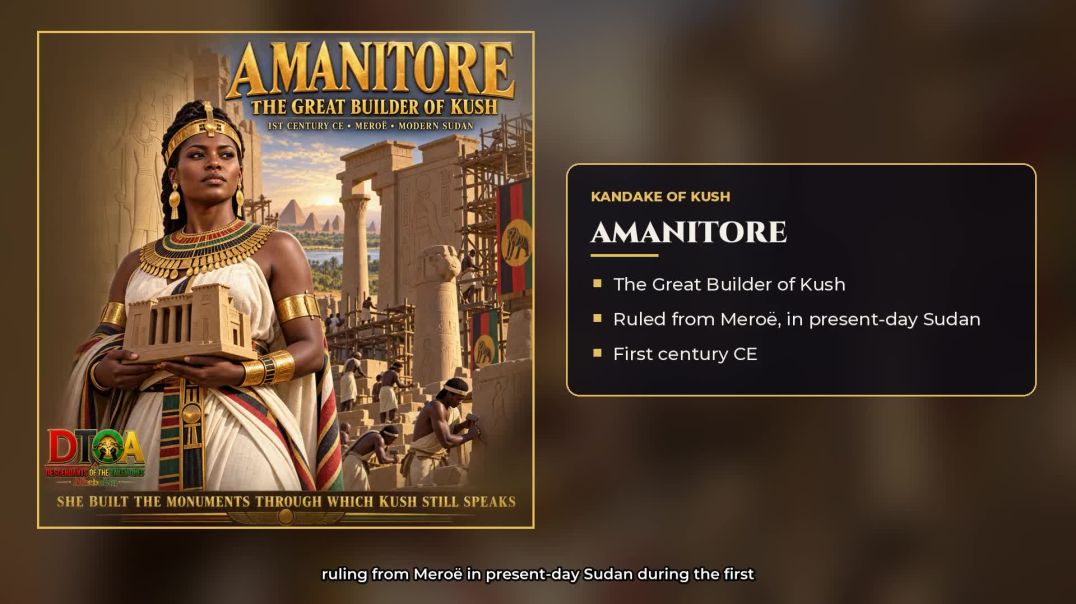
Amanitore was a powerful Kandake of the Kingdom of Kush, ruling from Meroë in present-day Sudan during the first century CE. She shared royal authority with King Natakamani—probably her son, though their precise relationship remains debated. Their reign saw one of the most extensive building programs in Meroitic history. Amanitore and Natakamani constructed, restored, or decorated temples across Kush, including major complexes at Naqa, Wad Ben Naga, Meroë, and Amara.
At Naqa, monumental reliefs portray Amanitore as an equal partner in royal power. On the Lion Temple of the Kushite god Apedemak, she appears triumphing over enemies—a symbolic declaration that the Kandake possessed the authority to defend Kush and preserve divine order. The royal pair also built temples dedicated to Amun and the goddess Mut. At Wad Ben Naga, archaeologists discovered Egyptian and Meroitic inscriptions bearing both rulers’ names, demonstrating their shared sponsorship of religious monuments. These inscriptions later contributed to scholars’ efforts to understand the still only partly deciphered Meroitic language.
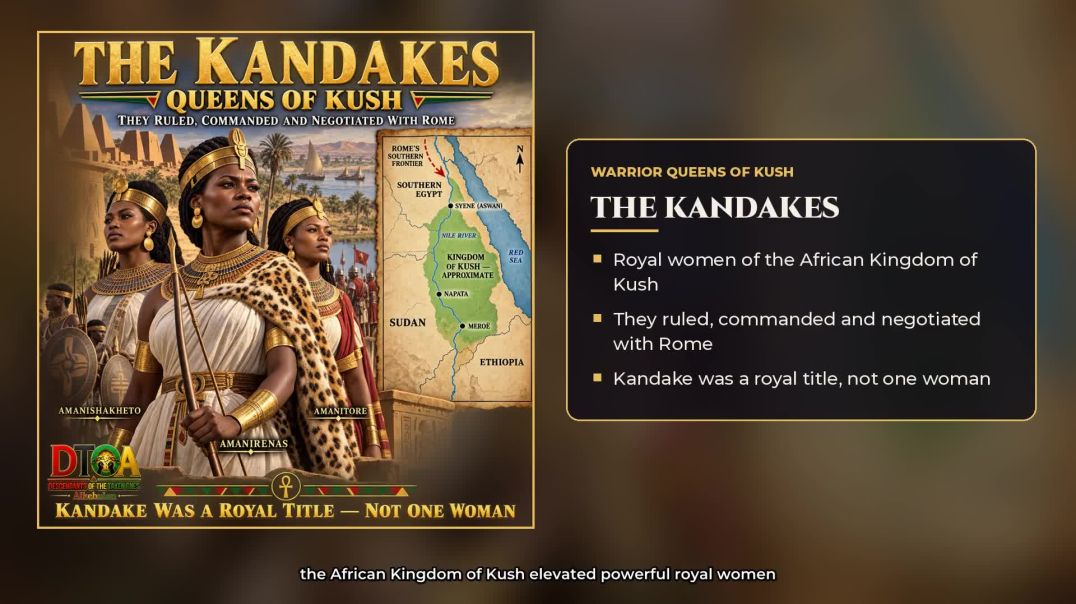
Amanitore’s reign shows that the Kandakes were not merely ceremonial queens. They exercised political and religious authority, commissioned major construction projects, and appeared prominently in the kingdom’s official art. The monuments associated with Amanitore reveal a confident African civilization with its own architecture, writing, religion, and traditions of female leadership.
Amanitore did not simply inherit a kingdom—she helped build the monuments through which Kush still speaks.
National Museum Prague: Building program of Natakamani and Amanitore
Thank you for your time. To support the channel. Please like, share, and subscribe, and pass this along to your family and friends. Remember: information kept to yourself is lost over time, but shared information becomes enduring knowledge. People who lose control of their history can be led to believe they never contributed anything.



















1 Comments
cliprize
17 days ago