
80 Views· 10/18/26· Black History
Brotherhood of Sleeping Car Porters (1925)The Rolling Network

Brotherhood of Sleeping Car Porters (1925)The Rolling Network
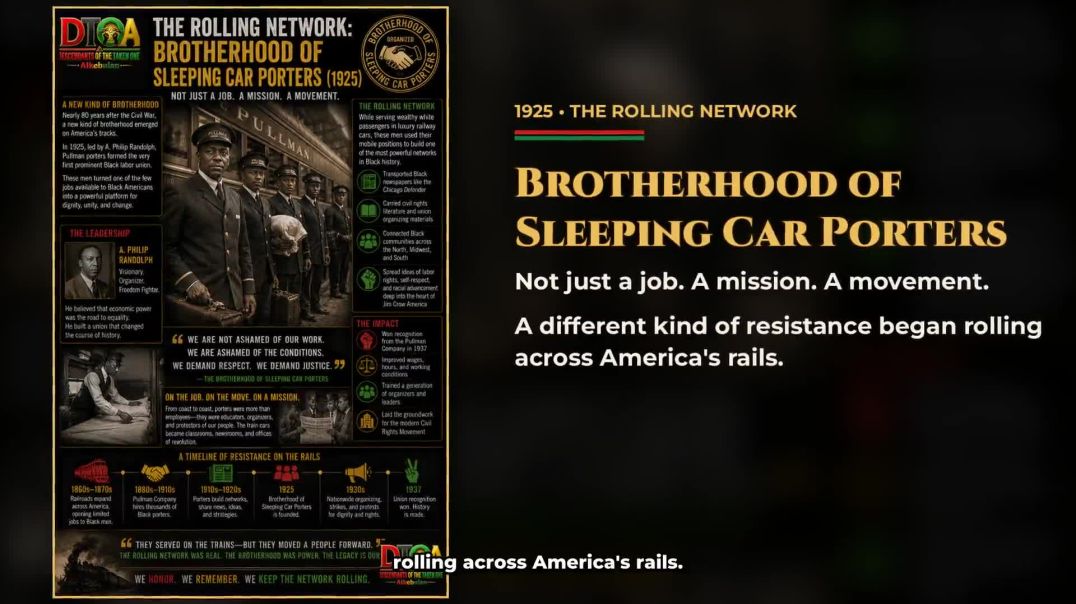
Nearly 80 years after the Civil War, a different kind of resistance began rolling across America’s rails.
In 1925, the Brotherhood of Sleeping Car Porters was founded under the leadership of A. Philip Randolph, who became the first major Black labor union leader in the United States. At a time when Black men were often confined to low-paying, grueling service work, Pullman porters turned one of the few jobs open to them into a platform for organizing, dignity, and revolt.
These men worked aboard luxury sleeping cars, serving wealthy white passengers with discipline, patience, and professionalism. They made beds, carried luggage, shined shoes, delivered meals, and endured constant disrespect. Many were simply called “George,” after the Pullman Company founder, as if their real names did not matter.
But behind that forced smile was a growing movement.
Because Pullman porters traveled constantly from city to city, they became a rolling information network linking Black communities across the nation. Moving through the North, Midwest, and South, they quietly carried more than passengers. They transported Black newspapers such as the Chicago Defender, labor news, civil rights literature, personal letters, political ideas, and organizing materials into places where open resistance could be dangerous or deadly.
In this way, the rail lines became more than transportation routes. They became arteries of Black communication.
The porters helped spread ideas about labor rights, self-respect, migration, and racial advancement deep into the Jim Crow South. They connected barbershops, churches, families, activists, and workers to a broader world of Black thought and struggle. Their mobility allowed them to bypass some of the isolation that white supremacy sought to impose on Black communities.
The Brotherhood was about more than wages and hours, though those battles mattered deeply. It was also about manhood, citizenship, economic justice, and collective power. After years of struggle, the union won recognition in 1937, proving that Black workers could organize nationally and compel one of America’s most powerful corporations to negotiate.
The Brotherhood of Sleeping Car Porters did more than improve working conditions. It helped build the infrastructure of the modern Black freedom struggle by training organizers, strengthening communities, and laying the groundwork for later civil rights campaigns. Men in this network became some of the quiet builders of a broader movement for justice.
The Rolling Network was real: a brotherhood on the rails, carrying not just passengers, but news, hope, strategy, and resistance from one Black community to another.
They served on the trains — but they also moved people forward. Thank you for your time. To support the channel. Please like, share, and subscribe, and pass this along to your family and friends. Remember: information kept to yourself is lost over time, but shared information becomes enduring knowledge. People who lose control of their history can be led to believe they never contributed anything.














0 Comments