
154 Views· 09/05/26· Black History
The Educator Who Built a School and a Future Lucy Craft Laney

The Educator Who Built a School and a Future Lucy Craft Laney
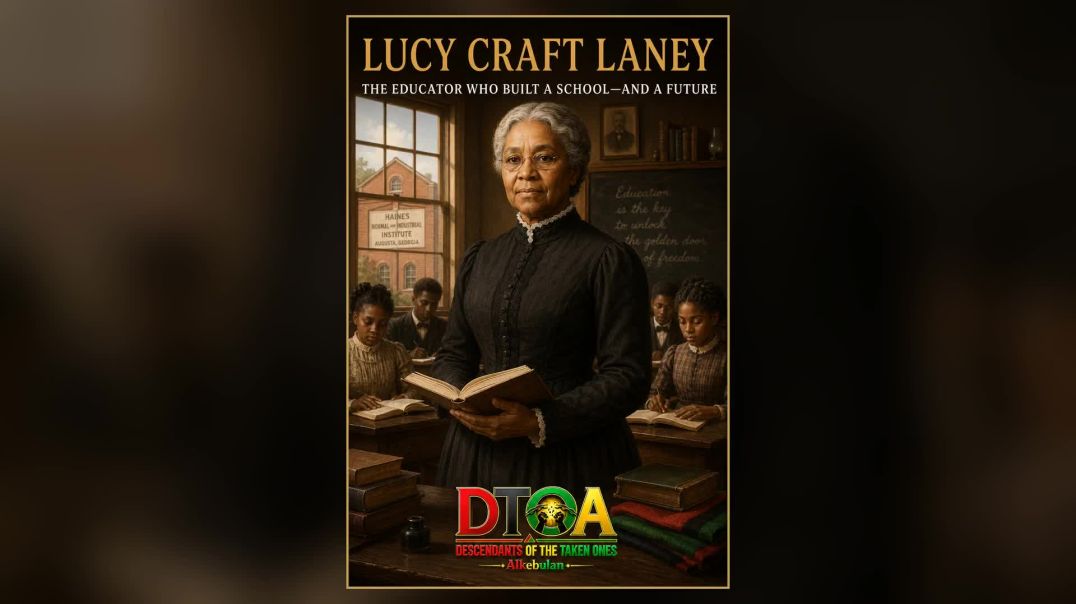
Lucy Craft Laney understood that Black freedom required more than broken chains. It required educated minds, trained teachers, strong institutions and opportunities that segregation tried to deny.
Born free on April 13, 1854, in Macon, Georgia, Laney was one of ten children born to David and Louisa Laney. Both parents had once been enslaved, but her father purchased his own freedom and later secured his wife’s freedom years before Lucy was born.
Although Georgia law prohibited teaching Black people to read, Laney learned to read when she was approximately four years old. Her extraordinary ability eventually carried her to Atlanta University, where she entered in 1869 and graduated with its first class in 1873.
Laney wanted to study Latin, but women were not permitted to take the classical course. Instead, she entered teacher training and began preparing herself for the work that would define her life.
After teaching throughout Georgia for ten years, Laney opened a small school in the basement of Christ Presbyterian Church in Augusta in 1883. Her first class contained only six students. Within two years, enrollment had grown to more than 200 children.
Laney traveled to a Presbyterian convention in Minneapolis seeking financial assistance. Although the convention initially rejected her appeal, educator and philanthropist Francine E. H. Haines recognized Laney’s determination and helped secure funding for the school.
The institution became the Haines Normal and Industrial Institute, named in Haines’s honor. It eventually occupied an entire city block and educated students from kindergarten through junior college.
Laney refused to limit Black education to manual labor. Her students studied mathematics, science, literature, Latin, music and the arts alongside industrial subjects. The institute trained Black teachers who carried education into communities throughout the South. It also established the Lamar School of Nursing, helping prepare Black women for professional medical careers when segregated institutions largely excluded them.
Haines Institute was more than a school. It became a cultural, intellectual and civic center for Augusta’s Black community. Laney also helped organize the Augusta branch of the NAACP and worked through women’s and interracial organizations to challenge injustice.
For approximately fifty years, she served as the institution’s principal, shaping generations of students. Among those influenced by her educational legacy were celebrated opera singer Jessye Norman, novelist Frank Yerby and many teachers, nurses and community leaders whose names history did not preserve.
Lucy Craft Laney died on October 23, 1933. Her grave remains near the school that bears her name in Augusta.
She began with six students, limited resources and a basement classroom. She left behind an institution, a trained generation and living proof that Black children deserved the highest education—not merely the education segregation was willing to provide.
Lucy Craft Laney did not simply teach children. She built the foundation from which generations could rise. To support the channel, please click the like button and subscribe to receive new videos
Sources: New Georgia Encyclopedia, Georgia Historical Society, Lucy Craft Laney Museum of Black History


















1 Comments
cliprize
12 days ago