
351 Views· 09/07/26· Black History
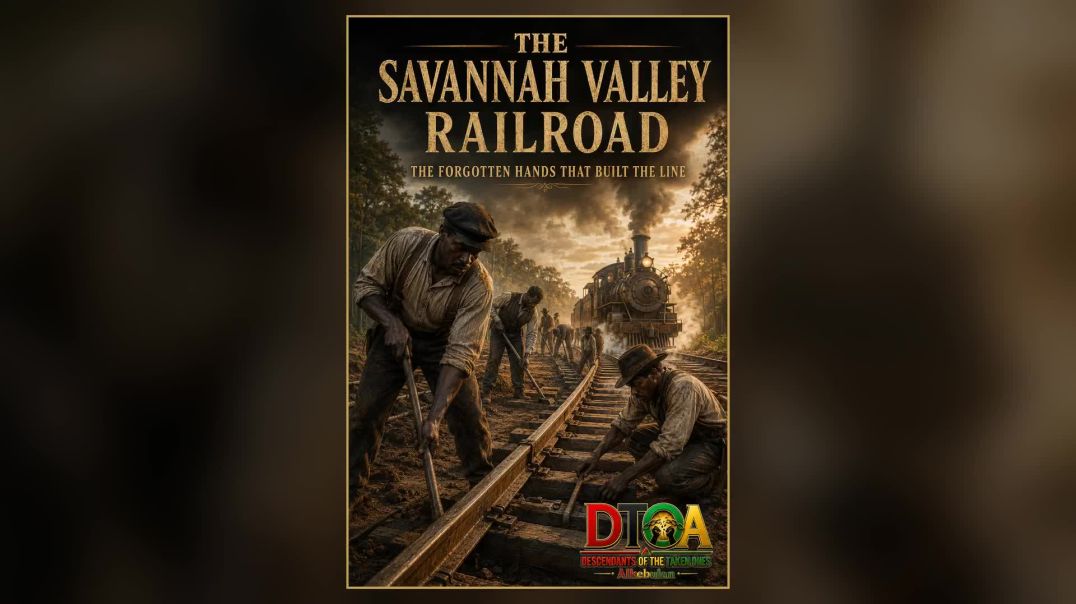
The Savannah Valley Railroad — The Forgotten Hands That Built the Line
The Savannah Valley Railroad — The Forgotten Hands That Built the Line
In the 1880s, steel rails began cutting through the western edge of South Carolina. The Savannah Valley Railroad connected Anderson with McCormick, passing through communities including Starr, Iva, Lowndesville, Calhoun Falls, Mount Carmel, Willington, and Bordeaux. The railroad’s first charter dated to the 1850s, but meaningful construction did not begin until the early 1880s. The line became operational in 1885 and was absorbed into the Port Royal and Western Carolina Railway the following year. It transported passengers, cotton, timber, agricultural products, and other freight through a region that had previously depended heavily on wagons, ferries, and river traffic. The railroad also helped communities such as Willington and Bordeaux develop into commercial railroad towns. South Carolina railroad history and the McCormick County historical record document this development.
But behind the official story of investors, railroad companies, and expanding towns were the laborers who performed the most punishing work. Railroad construction required men to clear forests, move earth, dig drainage ditches, raise embankments, place wooden ties, drive spikes, construct trestles, and maintain the tracks. This work was performed in extreme heat with limited machinery and constant danger. Black labor was fundamental to railroad construction and operation throughout the nineteenth-century South. During slavery, railroad companies used enslaved workers who were purchased or hired from enslavers. After emancipation, Black men continued working on southern railroads as construction laborers, trackmen, firemen, porters, cooks, and maintenance workers—usually in the hardest, lowest-paid, and least-recognized positions.
Because the Savannah Valley line was constructed after the Civil War, its workers were legally free. However, freedom did not bring economic equality. Black laborers throughout the South faced segregated occupations, unequal wages, dangerous working conditions, and few opportunities for advancement. Some modern accounts specifically state that underpaid Black workers helped build the Savannah Valley Railroad around Willington. That claim is historically plausible, but the readily available railroad histories do not identify the construction crews by name or provide a verified racial breakdown. It should therefore be presented as an important subject requiring further archival confirmation—not as a fully documented fact.
Passenger service eventually declined because of automobiles, the Great Depression, agricultural changes, and the boll-weevil crisis. Freight service continued until the Anderson-to-McCormick segment was abandoned in 1978. Part of the former route is now preserved as the approximately nine-mile Savannah Valley Railroad Trail between the Barksdale Ferry area and Willington. Today, visitors can still encounter railroad ties, whistle markers, the historic Mill Creek trestle, and the communities that grew alongside the tracks. The old railroad bed is more than a recreational trail. It is a pathway through buried labor history—one that should remember not only the companies that owned the railroad but also the unnamed workers whose hands cleared the land, carried the timber, laid the rails, and kept the trains moving.
Descendants of the Taken Ones honors the forgotten Black railroad workers whose labor helped build the transportation system of the American South—even when history failed to preserve their names.
To support the channel, please click the like button and subscribe to receive new videos










2 Comments
Copuffs843
7 days agocliprize
16 days ago