
234 Views· 09/03/26· Black History
THE BLACK INVENTOR WHO HELPED AMPUTEES FEED THEMSELVES AFTER THE VA REFUSED HER DEVICE BESSIE BLOUN

THE BLACK INVENTOR WHO HELPED AMPUTEES FEED THEMSELVES AFTER THE VA REFUSED HER DEVICE BESSIE BLOUNT GRIFFIN
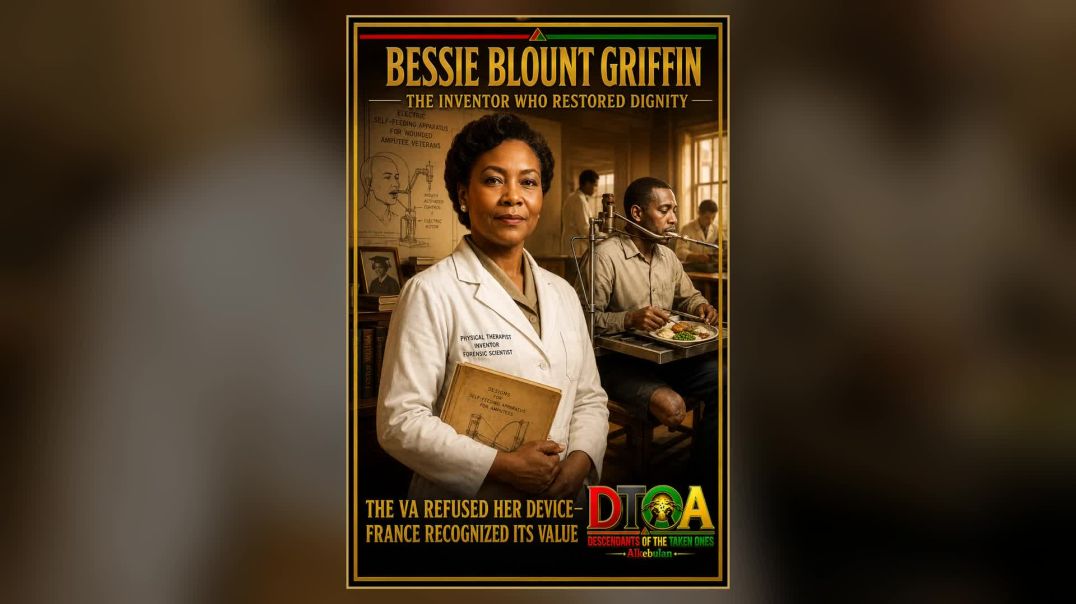
After World War II, thousands of American soldiers returned home with life-altering injuries. Many had lost arms or suffered paralysis that left them unable to feed themselves. Bessie Blount Griffin—a Black nurse, physical therapist, and inventor—saw their struggle firsthand. Born in Hickory, Virginia, on November 24, 1914, Blount grew up under segregation. When a teacher punished her for writing with her left hand, she taught herself to write with both hands—and later with her teeth and feet. Those abilities would eventually help her teach wounded veterans to regain their independence.
While treating amputees, Blount noticed that eating without assistance was one of their greatest challenges. She began developing an electric self-feeding apparatus from materials she could find, including plastic, tools, and household dishes. Her invention used a tube connected to a machine that delivered one bite of food at a time. When the patient bit down on the mouthpiece, the device released the next portion. This allowed people who could not use their arms or hands to control when and how quickly they ate.
It was more than a machine. It restored dignity. It enabled injured veterans to perform one of life’s most basic activities without relying entirely on another person. By 1948, Blount had developed a working device. She spent years trying to persuade the United States Veterans Administration to adopt it. Despite its potential to help the very veterans the agency was created to serve, VA officials rejected it as unnecessary and “impractical.” Smithsonian Magazine
Blount refused to let that rejection bury her invention. In 1952, she reportedly granted the rights to the French government at no charge so the device could be used in French military hospitals. Her purpose was not personal wealth. She wanted injured people to regain their independence. She later explained that she wanted to demonstrate that a Black woman could create something for the benefit of humanity.
Blount also invented a simpler, portable support that allowed a bowl or cup to be positioned near a patient’s face. She received U.S. Patent No. 2,550,554 for the invention in 1951. The Veterans Administration declined to manufacture her feeding technology, but France recognized its potential for military medicine. Library of Virginia
Her brilliance extended beyond physical therapy. Blount later entered forensic science and became an expert in handwriting and document examination. In 1977, she studied at Scotland Yard’s forensic laboratory in London and is widely recognized as the first Black woman to receive advanced training there. Bessie Blount Griffin’s story reveals a familiar pattern in American history: a Black innovator identified a serious problem, developed a practical solution, and was rejected by the institution that could have benefited most from her work.
But rejection did not define her. Her intelligence did. Her determination did. Her service to humanity did. The VA may have rejected her invention, but history must never refuse to recognize the woman who created it. Bessie Blount Griffin helped wounded veterans reclaim their independence and proved that compassion, paired with Black ingenuity, can transform lives.
Descendants of the Taken Ones Recovering the stories history tried to bury. To support the channel, please click the like button and subscribe to receive new videos


2 Comments
cliprize
14 days agoJOSEPH ELISHA
1 month ago