

113 Views· 10/30/26· Black History
Claudette Colvin was a teenage civil-rights pioneer whose courage helped lay the legal foundation fo

Claudette Colvin
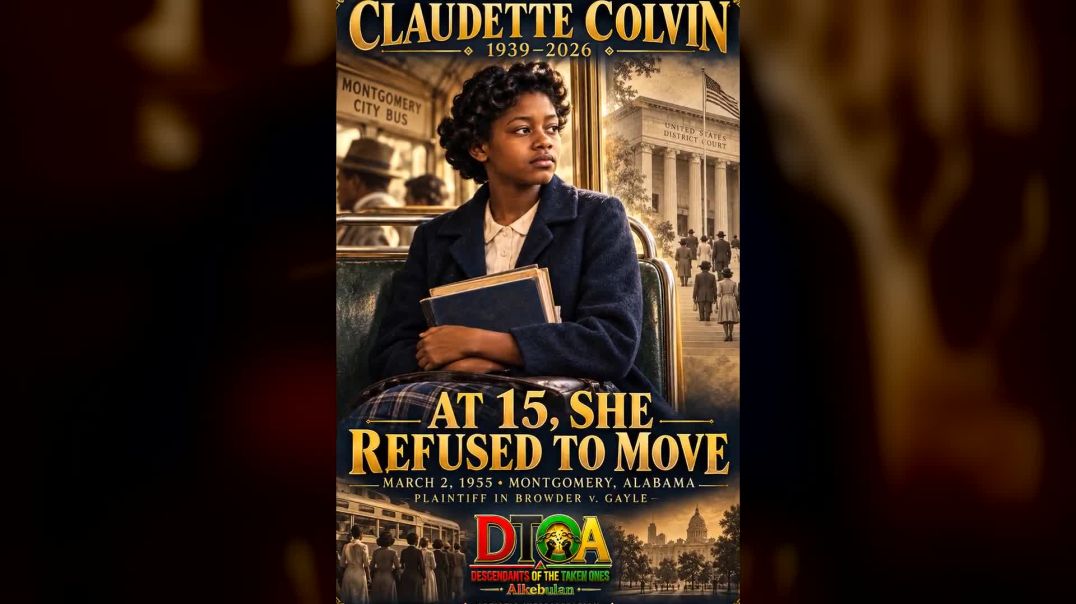
Claudette Colvin was a teenage civil-rights pioneer whose courage helped lay the legal foundation for ending bus segregation in Montgomery, Alabama.
On March 2, 1955, Claudette, only 15, boarded a Montgomery city bus after school. She was a student at Booker T. Washington High School and had been studying Black history, constitutional rights, and the long fight against segregation.
When the bus driver ordered her to give up her seat to a white passenger, Claudette refused.
She later said she felt the weight of history holding her down — as if Harriet Tubman and Sojourner Truth were on either side of her, keeping her seated. She knew she had paid her fare. She knew she was tired of being treated as less than human. And she knew the law was wrong.
Police dragged her off the bus, arrested her, and treated her harshly. She was a child, yet she had challenged Montgomery's racial order months before Rosa Parks became the national symbol of bus resistance.
At the time, many civil rights leaders were cautious about making Claudette the public face of the movement. She was young, working-class, dark-skinned, and later became pregnant. Respectability politics shaped how her story was handled, and for decades her name did not receive the same national recognition.
But Claudette Colvin’s courage did not disappear.
She became one of the key plaintiffs in Browder v. Gayle, the federal court case challenging Montgomery bus segregation. Along with other Black women, she testified, helping prove that segregated buses violated the Constitution. In 1956, the Supreme Court upheld the ruling, effectively ending bus segregation in Montgomery.
Claudette Colvin was not just “before Rosa Parks.” She was a freedom fighter in her own right — a teenager who sat down before the movement was ready to fully lift her up.
In June 1956, a federal court ruled that the bus segregation laws violated the Constitution’s guarantee of equal protection. The U.S. Supreme Court affirmed that ruling, clearing the way for the desegregation of Montgomery’s buses. Colvin’s testimony and courage were part of that legal victory. Encyclopedia of Alabama
Afterward, Colvin moved to New York and worked as a nurse’s aide. For many years, her contributions received far less public attention than they deserved. Later in life, she spoke more openly about her experience and shared it with younger generations. Encyclopedia of Alabama
Claudette Colvin died on January 13, 2026, at age 86. Her legacy reminds us that the civil rights movement was built by many people—including young people who recognized injustice and chose to confront it. Encyclopedia of Alabama
Descendants of the Taken Ones Claudette Colvin deserves to be remembered for both acts of courage: refusing to move and standing before a court to challenge the law. Claudette Colvin was fifteen when she refused to move, yet her courage was old enough to shake a city, challenge a system, and help change America.
Thank you for your time. To support the channel. Please like, share, and subscribe, and pass this along to your family and friends. Remember: information kept to yourself is lost over time, but shared information becomes enduring knowledge. People who lose control of their history can be led to believe they never contributed anything.
#claudettecolvin #browdervgayle #montgomerybusboycott #blackhistory #civilrightshistory #blackwomeninhistory #dtoaalkebulan #DescendantsOfTheTakenOnes


















1 Comments
Copuffs843
17 hours ago