
225 Views· 09/20/26· Black History
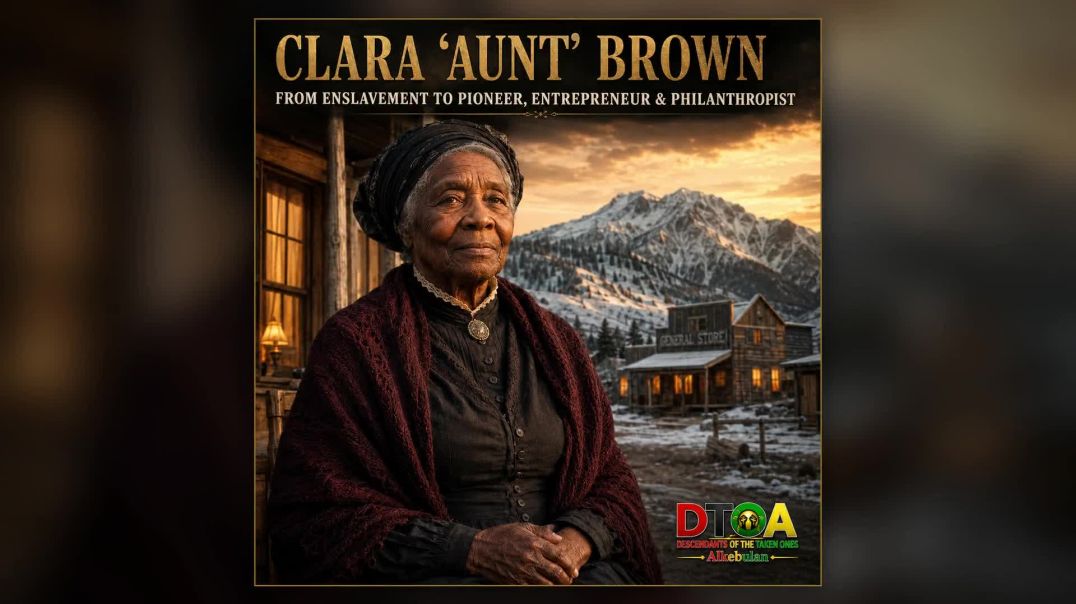
Clara “Aunt” Brown From Enslavement to the Angel of the Rockies

Clara “Aunt” Brown From Enslavement to the Angel of the Rockies
Clara Brown entered the world around 1800 in Virginia, born into a system that legally treated Black men, women, and children as property. She would eventually become one of the most remarkable pioneers of the American West—a successful entrepreneur, property owner, philanthropist, and community builder known throughout Colorado as “Aunt Clara.”
Clara and her mother were taken to Kentucky as children. She later married an enslaved man named Richard and became the mother of four children. Although slavery denied their legal independence, they created a family within the limited space the institution allowed them.
Then, around 1835, the man who enslaved the family died.
His property was sold. That “property” included human beings.
Clara, her husband, and their children were separated and sold to different enslavers. In a matter of hours, the auction block destroyed the family they had spent years building. Clara would spend much of the rest of her life searching for the children slavery had taken from her. She remained enslaved for more than two additional decades. Eventually, after the death of her final enslaver, Clara gained her freedom in the late 1850s. She was nearly sixty years old. For many people, that might have been the beginning of retirement. For Clara Brown, it became the beginning of an entirely new life. In 1859, thousands of fortune seekers were heading west during the Pike’s Peak Gold Rush. Clara found work as a cook on a wagon train traveling toward Colorado. Imagine the transformation.
A woman who had spent most of her life being told where she could live and work was now crossing the Great Plains as a free woman.
She eventually reached Central City, Colorado, one of the booming mining communities created by the gold rush.
Clara understood something important: miners searching for gold still needed food, clothing, laundry, housing, and services.
She established a laundry business.
It prospered. She saved her earnings and began investing in property, mining interests, and other opportunities. Within only a few years, the formerly enslaved woman had accumulated substantial wealth. But money never became the purpose of her life. Her generosity became legendary.
People called her “Aunt Clara” because her home became a place where they could find food, shelter, nursing care, advice, and assistance. She helped people regardless of whether they could repay her. When formerly enslaved Black Americans began seeking new opportunities after the Civil War, Clara used her resources to help some relocate to the West. Clara had built something for herself. Now she wanted others to build something too. Yet beneath all her success remained a wound money could never repair.
She still wanted her children.
For decades, Clara traveled and wrote letters seeking information about the family members who had been sold away from her. She returned east after emancipation hoping to locate them.
Some had disappeared into the enormous human tragedy created by slavery.
But Clara refused to stop searching. Nearly half a century after she had been separated from her children, extraordinary news finally reached her. Her daughter Eliza Jane was alive. She was living in Iowa. Clara was now elderly and no longer possessed the fortune she once controlled. Years of generosity, economic setbacks, and helping other people had reduced much of her wealth. None of that mattered.
She traveled to find her daughter. After approximately forty-seven years, mother and daughter were reunited. Think about what that moment represented. Slavery had separated them when Eliza Jane was young. When they saw each other again, both were free women. The institution that had attempted to permanently destroy their family had failed to keep them apart forever. Clara returned to Colorado with her daughter and granddaughter. By then, she had become one of the best-known Black pioneers in the state. In 1885, she was admitted to the Society of Colorado Pioneers, recognition of the role she had played in Colorado’s early development.
That honor carried extraordinary meaning.
The woman who once could not legally own herself was being recognized as one of the people who helped build a state. Clara Brown died in Denver on October 23, 1885.
Her story represents one of the most extraordinary reversals in American history.
She was born property. She became a property owner. Her labor once created wealth for enslavers. She became an entrepreneur whose labor created wealth for herself.
Her family was torn apart. She helped other families build new homes. She had once been denied the right to determine where she lived. She crossed the country and created a new life in the Rocky Mountains. And when success finally came, she did not close the door behind her.
She opened it wider.
That is why Clara Brown deserves to be remembered as more than a successful businesswoman. She understood that economic independence could become a weapon against the legacy of slavery. She transformed money into opportunity.
Property into security. Her greatest achievement was not how much wealth she accumulated.
It was how many lives she touched with it. Slavery took her family. Freedom gave her the power to search. Hard work gave her independence. Business gave her resources.
And generosity turned those resources into a legacy. Clara “Aunt” Brown was a mother who never stopped searching, a pioneer who helped build Colorado, an entrepreneur who created wealth from almost nothing, and a philanthropist who understood that freedom becomes more powerful when it is shared.
CLARA “AUNT” BROWN
Formerly Enslaved. Western Pioneer. Entrepreneur. Philanthropist. Angel of the Rockies.




















2 Comments
cliprize
7 days agoJOSEPH ELISHA
20 days ago