
211 Views· 09/20/26· Black History
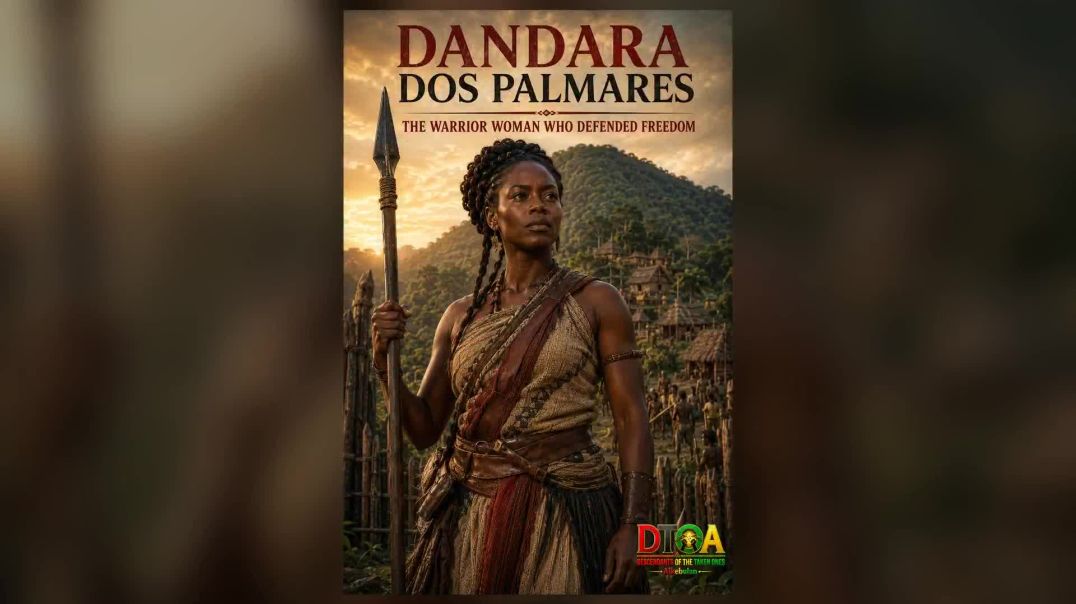
Dandara dos Palmares The Warrior Woman Who Defended Freedom

Dandara dos Palmares
The Warrior Woman Who Defended Freedom
In the mountains of colonial Brazil, where Portuguese slaveholders expected Africans to live and die in bondage, a free Black community flourished behind wooden defenses and dense forests. It was called Quilombo dos Palmares. Among those remembered for defending it was a Black woman whose name endured even though the colonial record preserved very little about her life: Dandara dos Palmares. The exact circumstances of Dandara’s birth are unknown. Historians cannot confirm whether she was born in Africa or Brazil, and no surviving portrait depicts her appearance. Many familiar details about her life come from oral tradition and later retellings rather than contemporary documents.
The lack of extensive documentation does not prove that those women were absent from the struggle. It shows whose lives the colonial system deemed worthy of recording. Dandara is remembered as a warrior, strategist, and leader within Palmares—the largest and most enduring federation of quilombos in colonial Brazil. Established in the mountainous region now associated with Alagoas, Palmares survived much of the seventeenth century despite repeated military campaigns aimed at its destruction.
Palmares consisted of interconnected settlements with homes, agriculture, political leadership, trade, and organized defenses. Its residents cultivated cassava, corn, beans, and bananas. They hunted, made tools, raised children, and built a society beyond the direct control of the Portuguese slave system. Women were essential to that survival. They cultivated food, sustained community life, raised new generations, and helped defend the settlements. Dandara came to embody those many Black women whose labor, intelligence, and courage sustained Palmares. Tradition identifies her as the companion of Zumbi dos Palmares, its most celebrated resistance leader. Later accounts also say they had three children, though the surviving evidence about their family is limited. Dandara’s importance, however, cannot be reduced to being Zumbi’s wife. She is remembered for helping shape military strategy, defending the community, and fighting alongside the men and women of Palmares. Popular accounts describe her as skilled in combat, hunting, and agriculture. Claims that she specifically practiced capoeira are frequently repeated but cannot be firmly established by contemporary records.
The political crisis that transformed Palmares reached a decisive point in 1678. After years of conflict, colonial authorities offered a peace agreement to Ganga Zumba, one of Palmares’ most powerful leaders. The proposal offered freedom and land to certain Palmarinos who relocated, accepted Portuguese authority, and stopped sheltering new fugitives from slavery. The agreement did not abolish slavery. It offered safety to some while leaving countless other Africans in chains Zumbi rejected the agreement, and traditions about Dandara place her firmly on the side of continued resistance. Their position was grounded in a clear principle: Freedom that excludes the enslaved is not freedom. Palmares continued to resist Portuguese attacks for years. In 1694, colonial forces under Domingos Jorge Velho launched a major assault on Macaco, the federation's political center. Cannons and heavily armed troops eventually broke through its defenses.
Dandara’s final fate remains uncertain. The most widely repeated tradition holds that she was captured during the destruction of Palmares and died rather than be enslaved. Some accounts say she took her own life by leaping from a precipice, but historians lack contemporary documentation confirming the precise circumstances. That story should therefore be presented as a powerful tradition—not an established fact. What is certain is that the slaveholding forces attempted to destroy Palmares both physically and symbolically. Yet they could not destroy what it represented: Africans and their descendants governing themselves, defending their families, and refusing to accept that bondage was their natural condition.
Dandara now stands as one of Brazil’s foremost symbols of Black women’s resistance. In 2019, her name was officially inscribed in Brazil’s Book of Heroes and Heroines of the Homeland. Her recognition came centuries after her struggle—centuries when male leaders were more likely to be documented and honored, while women’s contributions were pushed into the shadows.
Dandara’s legacy reminds us that Black resistance was never carried by men alone. Behind every defended settlement, cultivated field, protected child, and preserved tradition were women whose names the official record often failed to record.
Dandara represents those women. She was not merely standing beside history. She was helping to make it. The colonial record could not preserve every detail of Dandara’s life, but it could not erase the meaning of her resistance.
We speak your name, Dandara dos Palmares. DTOA Reflection. Dandara’s history teaches us to examine silence carefully. When records created by oppressors fail to describe the oppressed, we must not mistake that silence for insignificance. We honor Dandara honestly not by presenting every legend as proven fact, but by recognizing the larger truth her memory carries: Black women fought, led, cultivated, protected, and died in the struggle for freedom.
Descendants of the Taken Ones honors Dandara dos Palmares—the warrior woman who defended freedom. Historical references: Fundação Cultural Palmares, Enslaved.org.
To support the channel, please click the like button and subscribe to receive new videos









2 Comments
cliprize
7 days agoJOSEPH ELISHA
20 days ago