
136 Views· 09/04/26· Black History
History of the 555th Parachute Infantry Battalion

History of the 555th Parachute Infantry Battalion — “Triple Nickles”
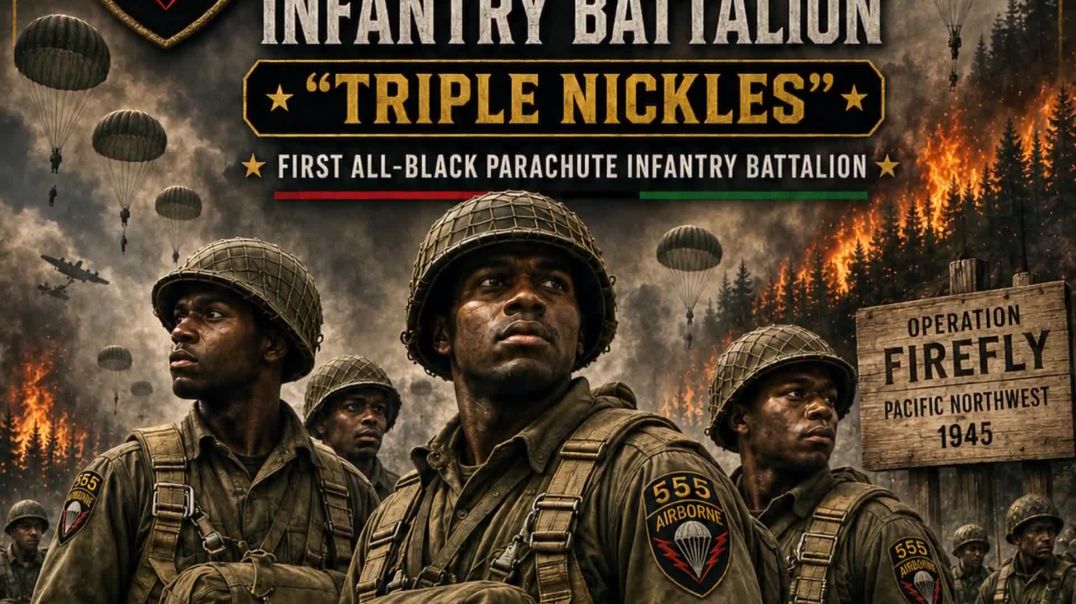
The 555th Parachute Infantry Battalion, known as the “Triple Nickles,” was the first all-Black parachute infantry battalion in the United States Army. Created during World War II, when the military was still segregated, the unit challenged the widespread belief that Black soldiers were unfit for elite combat assignments.
The battalion’s beginnings can be traced to December 1942, when the Advisory Committee on Negro Troop Policies recommended establishing a Black airborne unit. The 555th Parachute Infantry Company was placed on Army rolls on February 25, 1943, and officially activated at Fort Benning, Georgia, on December 30, 1943.
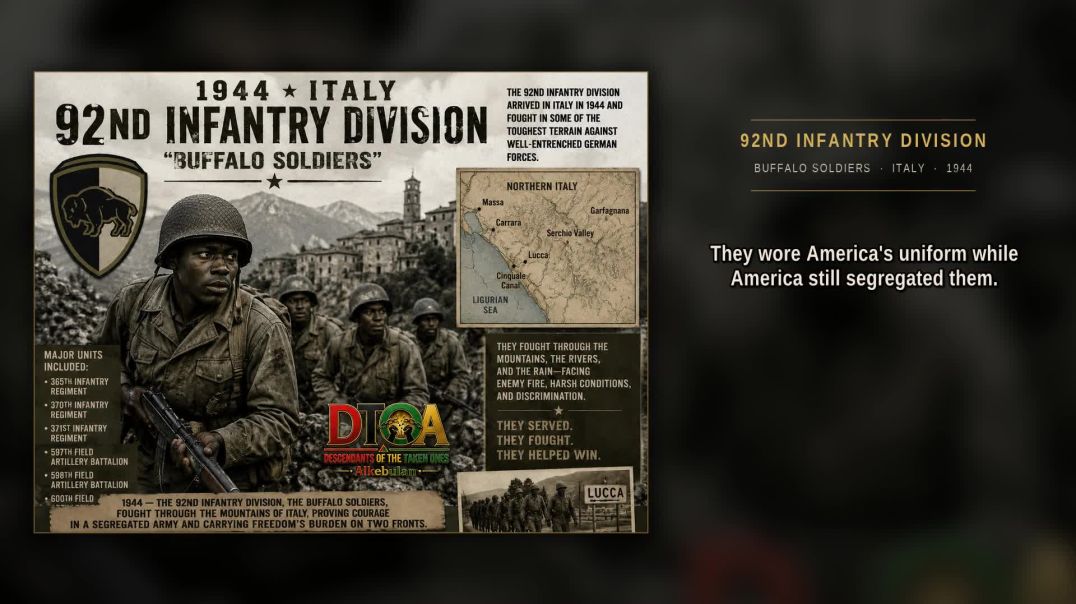
Many of its first soldiers came from the 92nd Infantry Division, historically associated with the Buffalo Soldiers. That connection helped inspire the nickname “Triple Nickles”—a reference to the number 555 and the Buffalo nickel.
First Sergeant Walter Morris played a central role in the unit’s development. Black soldiers assigned to support duties near the Airborne School had no established path to become paratroopers, so Morris began putting his men through airborne-style physical training. Their discipline and performance proved they were capable.
Nineteen soldiers were selected for a test platoon. On February 18, 1944, sixteen enlisted men graduated from Airborne School as the Army’s first Black paratroopers. Black officers soon completed the training as well.
Airborne training was demanding. Soldiers endured weeks of running, calisthenics, parachute landing drills, tower exercises, and five qualifying jumps. After training at Fort Benning, the unit moved to Camp Mackall, North Carolina. On November 25, 1944, it was reorganized as Company A, 555th Parachute Infantry Battalion.
The men expected deployment to Europe or the Pacific, but they were never sent overseas for combat. Instead, the Triple Nickles received a secret homeland-defense assignment known as Operation Firefly.
Japan had launched balloon bombs designed to travel across the Pacific on the jet stream and ignite forest fires in the western United States. In May 1945, the 555th deployed to Pendleton, Oregon, and Chico, California, where its members fought forest fires and helped locate and dispose of unexploded Japanese bombs.
During this mission, the battalion became America’s first Black military smokejumpers. Its soldiers parachuted into isolated forests, fought fires under dangerous conditions, handled explosive devices, and sometimes remained in the wilderness for days with only the supplies they carried.
The battalion completed approximately 1,200 jumps, helped control 36 fires, and disposed of several bombs.
Despite their elite status and outstanding service, the Triple Nickles continued to face racism and segregation. They were trained paratroopers serving their country, yet they were still denied equal access to some military facilities.
After World War II, the battalion returned to Fort Bragg, North Carolina. Major General James Gavin, commander of the 82nd Airborne Division, supported integrating the men into the division.
On December 15, 1947, the 555th was inactivated, and many of its soldiers joined the 3rd Battalion, 505th Airborne Infantry Regiment. Their integration into the 82nd Airborne Division occurred before President Harry S. Truman issued Executive Order 9981 in 1948, directing the desegregation of the armed forces.
The Triple Nickles were more than the Army’s first Black paratroopers. They proved that Black soldiers could master elite airborne training, perform dangerous missions, lead under pressure, and meet the highest military standards. Some former members later helped form the core of the Second Ranger Infantry Company, extending their influence into another elite military unit.
Before America fully opened the door, the Triple Nickles jumped through it. They fought fire from the sky, carried forward the legacy of the Buffalo Soldiers, and helped change the future of the United States Army.
















3 Comments
cliprize
13 days agoTdscott
1 month ago(❁´◡`❁)
JOSEPH ELISHA
1 month ago