
251 Views· 09/30/26· Black History
Prairie View A&M University: From Plantation Ground to Panther Pride

Prairie View A&M University: From Plantation Ground to Panther Pride
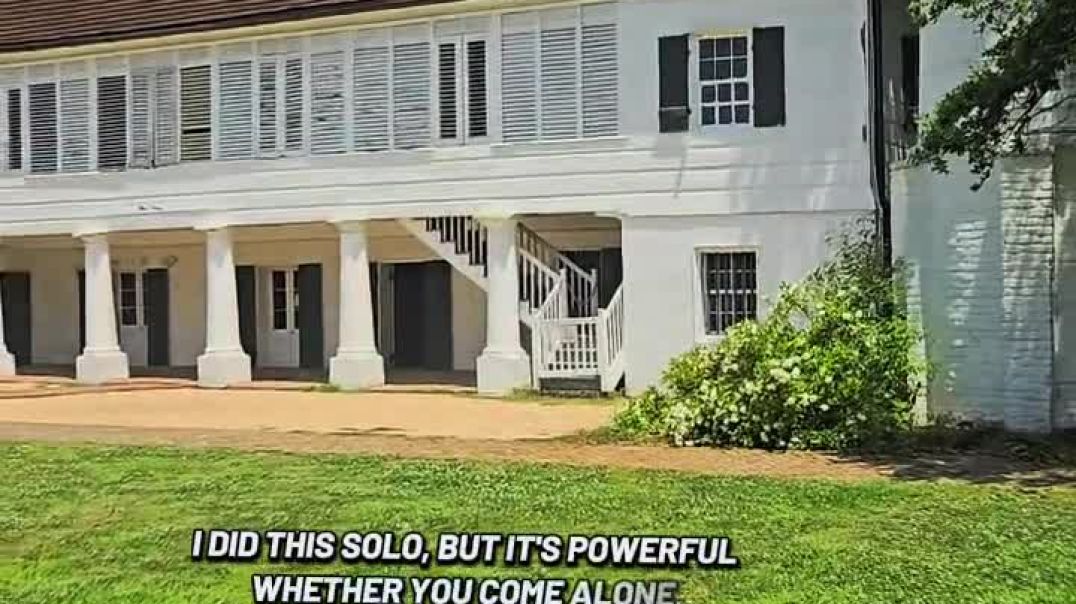
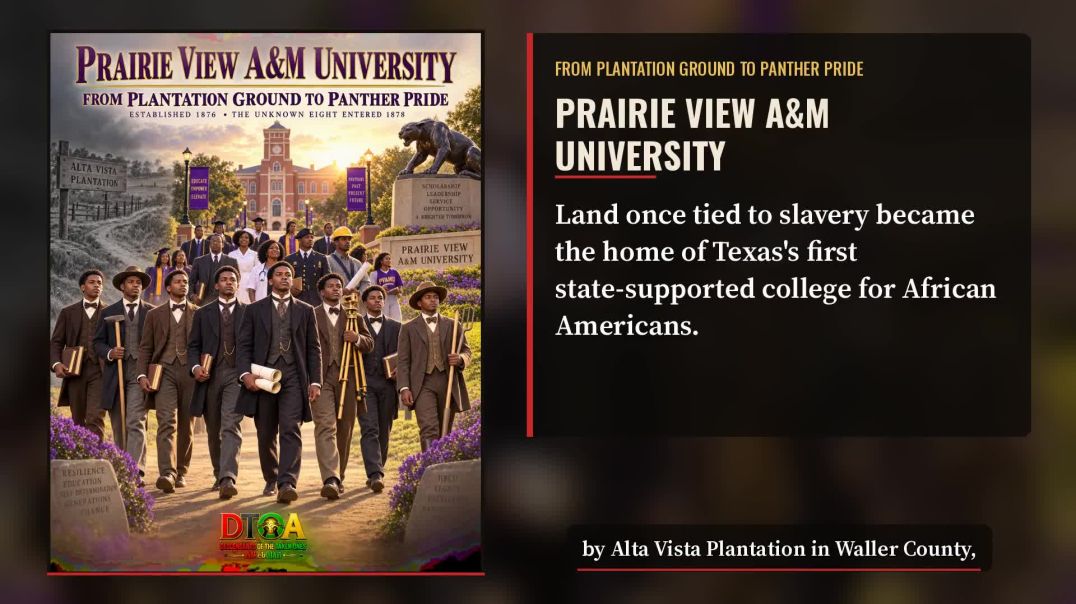
Prairie View A&M University stands on land once occupied by Alta Vista Plantation in Waller County, Texas.
That transformation carries profound meaning.
Land once associated with slavery and Confederate power eventually became the home of the first state-supported college for African Americans in Texas.
During Reconstruction, the Texas Constitution of 1876 required separate educational institutions for White and Black students. On August 14, 1876, the Texas Legislature established the Alta Vista Agricultural and Mechanical College of Texas for Colored Youth. (PVAMU Home)
The state purchased approximately 1,388 acres of the former plantation. On March 11, 1878, eight young Black men arrived to begin their studies.
Their names were not preserved in the surviving institutional record.
Today, they are remembered as the Unknown Eight—the first African Americans to enroll in a state-supported college in Texas. (PVAMU Home)
The original program struggled and closed shortly after opening. But the effort did not die.
In 1879, the institution reopened as Prairie View State Normal School, focusing on preparing Black teachers. Those educators brought knowledge to communities across Texas, building schools and expanding literacy during an era when segregation severely restricted Black educational opportunities.
Over the following decades, Prairie View expanded into agriculture, mechanical arts, nursing, engineering, science, education, and the liberal arts. Its name changed several times as its mission evolved:
• Alta Vista Agricultural and Mechanical College
• Prairie View State Normal School
• Prairie View State Normal and Industrial College
• Prairie View University
• Prairie View Agricultural and Mechanical College of Texas
• Prairie View A&M University, adopted in 1973
Prairie View became an 1890 land-grant institution with a public mission to teach, conduct agricultural research, and serve communities historically denied equal access to the state's resources. (Prairie View A&M University Academic Catalog)
Its graduates became educators, engineers, nurses, scientists, military officers, business leaders, architects, public servants, and advocates for civil rights.
Prairie View’s history is also inseparable from the struggle for political power. For generations, Black students and Waller County residents fought discriminatory practices that restricted their right to vote. That struggle reminds us that education and citizenship have always been connected.
Prairie View A&M is more than a university.
It is proof that Black people could transform plantation land into classrooms, laboratories, libraries, and pathways to freedom.
The Unknown Eight entered a school whose future was uncertain.
Nearly 150 years later, generations of Panthers have ensured that their first steps were not taken in vain.
The plantation represented what was done to our ancestors. Prairie View represents what their descendants built afterward.
DTOA—Descendants of the Taken Ones. We remember the ground, the struggle, and the institutions our people built. Thank you for your time. To support the channel. Please like, share, and subscribe, and pass this along to your family and friends. Remember: information kept to yourself is lost over time, but shared information becomes enduring knowledge. People who lose control of their history can be led to believe they never contributed anything.








1 Comments
cliprize
18 days ago