
336 Views· 09/01/26· Re-Education
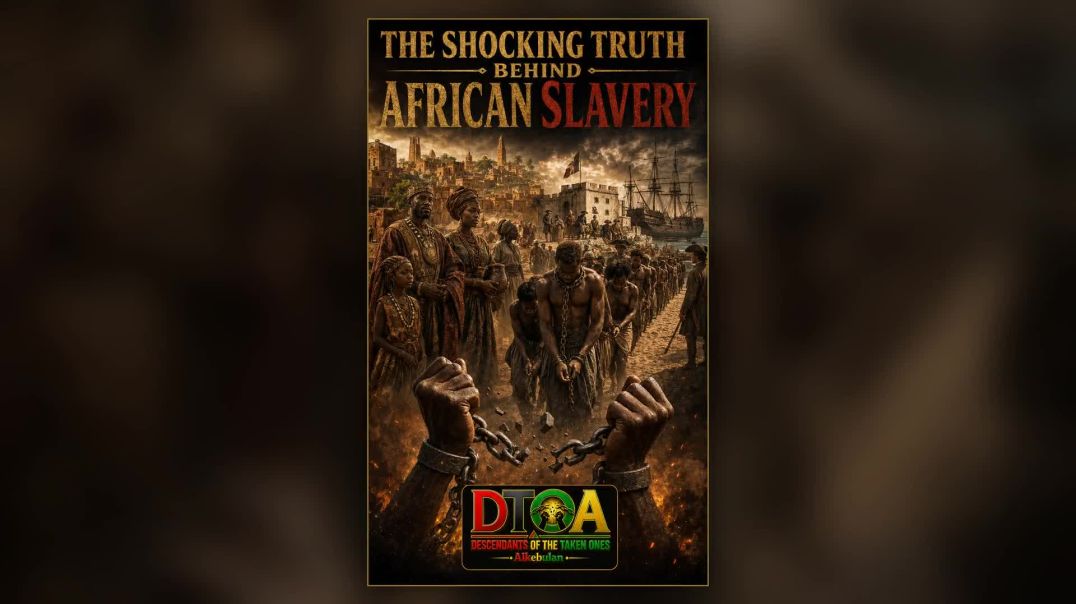
The Shocking Truth Behind African Slavery
The Shocking Truth Behind African Slavery
The History They Reduced to “Africans Sold Africans”
Whenever the transatlantic slave trade is discussed, someone eventually declares, “Africans sold their own people.”
The statement contains a fragment of truth—but it is often used to conceal a much larger crime.
Africa was not a single country or one united people. It was—and remains—a vast continent of kingdoms, nations, ethnic groups, languages, and rival political powers. Most people living in the 1500s did not identify themselves simply as “Africans,” just as Europeans did not regard every other European as one of their own.
Slavery and systems of forced labor existed in parts of Africa before Europeans arrived, as they existed in Europe, Asia, the Middle East, and the Americas. Prisoners of war, debtors, criminals, and captives could be enslaved. Conditions varied greatly. In some African societies, enslaved people could marry, own property, become members of a household, gain freedom, or rise to influential positions.
These systems could be brutal, and they should not be romanticized. But they were not identical to the racialized, hereditary chattel slavery constructed across the Atlantic world.
European colonization of the Americas created an enormous demand for forced labor. Portugal, Britain, Spain, France, the Netherlands, Denmark, and other European powers developed commercial networks that transformed human captivity into an international industry.
European merchants financed voyages, built and operated slave ships, established coastal forts, supplied weapons and manufactured goods, insured human cargo, and transported captives across the Atlantic. Colonial governments wrote laws declaring Africans and their descendants permanent property. Plantation owners then exploited their labor to produce sugar, cotton, tobacco, coffee, rice, and other commodities.
Yes, some African rulers, merchants, and military leaders participated. Some sold prisoners captured in wars. Others conducted raids or kidnapped vulnerable people to meet foreign demand. Certain states gained wealth and weapons through the trade while neighboring communities were devastated.
That participation must be acknowledged honestly.
But saying “Africans sold Africans” as though the entire continent willingly sold itself is historically dishonest. It erases the millions of Africans who were captured, the communities that resisted, the rulers who rejected the trade, and the people who fought slave raiders and foreign traffickers.
It also ignores the unequal machinery behind the system.
Europeans did not usually conquer the African interior during the early centuries of the trade. Instead, they exploited existing conflicts, encouraged warfare, traded firearms for captives, and created a market so profitable that human kidnapping spread across entire regions. Demand from plantations in the Americas turned older forms of servitude into a massive system of commercial deportation.
More than 10 million captive Africans survived transportation to the Americas, while countless others died during raids, forced marches, imprisonment along the coast, and the Middle Passage. Families disappeared. Communities were emptied. Political instability intensified, and generations of human knowledge and potential were stolen from the continent. The Library of Congress describes how European colonial demand expanded the trade and profoundly disrupted West and Central African societies.
The deepest distinction was what happened after the captives reached the Americas.
European colonial societies constructed slavery around race. An African could be bought, sold, mortgaged, inherited, beaten, sexually exploited, and worked to death. In many colonies, the child of an enslaved woman inherited her status. Enslavement was no longer merely a consequence of war or debt it became a permanent condition assigned to Black people and passed from one generation to the next.
To justify this system, Europeans developed false theories of African inferiority and white supremacy. Racism did not simply produce Atlantic slavery; Atlantic slavery also helped construct and institutionalize modern racism. UNESCO identifies these racial myths as one of the trade’s enduring global legacies. UNESCO
Yet African history is not merely a history of captivity.
Africans resisted at every stage. They defended their communities, escaped from coastal prisons, revolted aboard ships, sabotaged plantations, formed maroon settlements, preserved African spirituality and culture, and fought for freedom across the Americas. The Haitian Revolution proved that enslaved Black people could defeat European armies and destroy a slave regime.
The truth requires holding every guilty party accountable: African collaborators, European merchants, colonial governments, shipowners, insurers, bankers, and plantation families who built wealth from human suffering.
But responsibility must be measured according to power, scale, control, and profit.
African participation does not erase European authorship of the Atlantic commercial system. It does not excuse the governments that legalized hereditary racial bondage. And it does not transfer responsibility from the people who created, expanded, protected, and profited from one of history’s greatest crimes onto its victims.
The Taken Ones were not born slaves.
They were farmers, soldiers, metalworkers, merchants, scholars, spiritual leaders, mothers, fathers, and children. They came from societies with histories stretching back thousands of years.
They were not cargo.
They were human beings who were captured, trafficked, and forced into a system designed to steal their labor, identity, freedom, and descendants.
That is the shocking truth behind African slavery and the truth must never be reduced to a sentence meant to excuse the people who built the ships, controlled the colonies, wrote the laws, and collected the wealth.
We are the Descendants of the Taken Ones but we are also the descendants of those who resisted, survived, and remembered.







1 Comments
cliprize
8 days ago