
66 Views· 11/04/26· Black History
JAMES BALDWIN: THE WRITER WHO MADE AMERICA FACE ITSELF

JAMES BALDWIN: THE WRITER WHO MADE AMERICA FACE ITSELF
Descendants of the Taken Ones
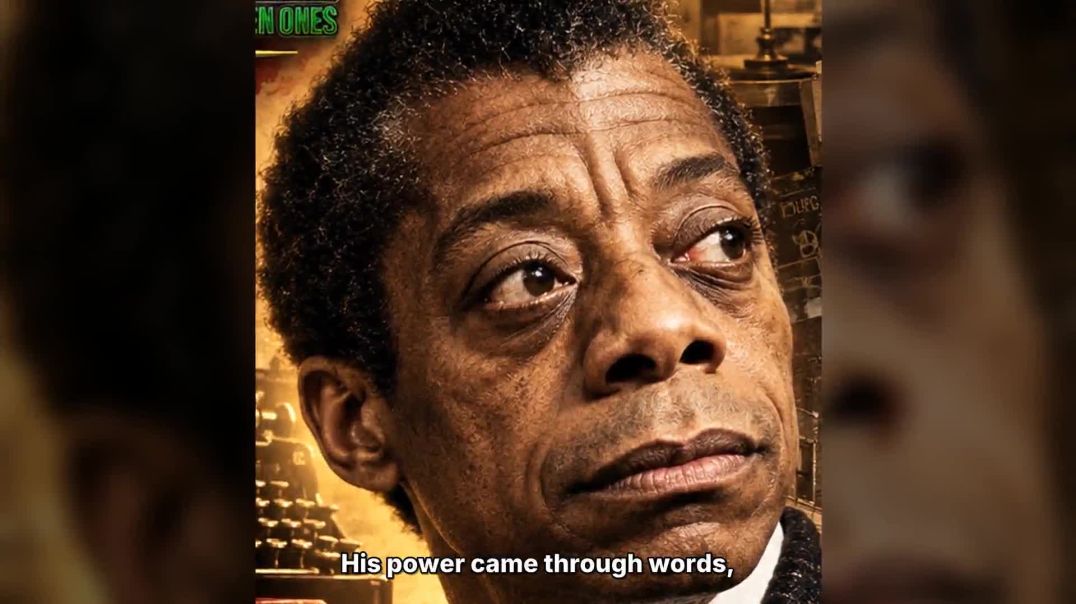
James Baldwin carried no army. His power came through words—written on the page, spoken from the stage, or delivered directly to someone who would rather look away. He examined racism, belonging, sexuality, faith, and the gap between America’s promises and Black Americans’ lives.
The FBI collected information about him.
Baldwin’s story belongs alongside those of other Black Americans whose public influence and political ties drew federal scrutiny. His writing challenged the country to confront injustice, and his growing prominence made that challenge harder to ignore. Born in Harlem on August 2, 1924, Baldwin grew up amid poverty, religious discipline, and racial discrimination. As a teenager, he preached in a Pentecostal church. Although he eventually left the pulpit, its rhythms remained in his language: urgency, searching questions, and the insistence that people examine their consciences.
He attended DeWitt Clinton High School in the Bronx, where he honed his writing. In 1948, he moved to Paris, seeking space to live and work beyond the pressures he faced in the United States. Distance gave him a new perspective on America, but it never ended his engagement with it. His first novel, Go Tell It on the Mountain, appeared in 1953. Drawing on the religious world of his youth, it explored family, spiritual struggle, and the emotional weight of growing up Black in America.
In Notes of a Native Son, published in 1955, Baldwin examined race through essays linking public injustice to intimate experience. Giovanni’s Room, published in 1956, confronted same-sex desire, shame, and the harm people inflict when they cannot accept themselves.
Baldwin resisted the boundaries others imposed on him. He wrote about the full complexity of human life.
With The Fire Next Time in 1963, he challenged Americans to reckon with racial injustice and the consequences of resisting change. His writing could be fierce, but it also demanded responsibility: people had to confront what they had inherited and decide what they would continue to defend.
As his influence grew, so did government attention.
The FBI maintained an extensive file on Baldwin, collecting information on his public activities, statements, and associations. His civil rights involvement and connections to people and organizations under scrutiny drew the bureau’s investigative attention.
A file’s existence does not prove wrongdoing. Reports about a speech or a meeting establish that officials recorded those activities; they do not establish that the activities were criminal.
That distinction is central to Baldwin’s story. Writing about racism, criticizing government policy, and supporting civil rights are legitimate forms of public participation. Government scrutiny, however, can nevertheless impose a burden on those exercising those freedoms.
Baldwin repeatedly returned to the United States and became deeply involved in the civil rights struggle. He traveled through the South, met with organizers, and used his visibility to draw attention to their work.
He understood that the movement depended on people whose names rarely made the newspaper headlines: families accepting danger, students organizing, and communities sustaining one another despite intimidation.
In 1965, Baldwin debated William F. Buckley Jr. at the Cambridge Union on whether the American dream had been achieved at the expense of Black Americans. He linked the country’s prosperity to the labor and exclusion of Black people, prompting listeners to confront the human cost behind a national ideal.
His public presence carried particular weight because he was a Black gay writer who refused to remain silent about either racism or sexuality. He challenged assumptions about who could speak with authority and whose experiences deserved to shape public understanding. Baldwin died in Saint-Paul-de-Vence, France, on December 1, 1987. His books remain a testament to extraordinary literary achievement and sustained moral inquiry.
For Descendants of the Taken Ones, his legacy also raises a question about power: what does it reveal about a country when a writer’s criticism is used as material for a government dossier? Baldwin asked America to examine itself honestly. Remembering him means reading his work, understanding the pressures he faced, and defending the freedom to speak with comparable courage.
James Baldwin made people listen to lives they had been taught to overlook. His voice still asks what we are willing to see and what we will do when we see it.
Thank you for your time. To support the channel. Please like, share, and subscribe, and pass this along to your family and friends. Remember: information kept to yourself is lost over time, but shared information becomes enduring knowledge. People who lose control of their history can be led to believe they never contributed anything.
#jamesbaldwin #dtoa #descendantsofthetakenones #alkebulan #blackhistory #blackwriters #blackliterature #civilrights #fbisurveillance #freedomofexpression #thefirenexttime #gotellitonthemountain #notesofanativeson #blacklgbtqhistory #KnowYourHistory










0 Comments