

172 Views· 08/31/26· Re-Education
The Warrior Who Made Freedom His Kingdom Zumbi dos

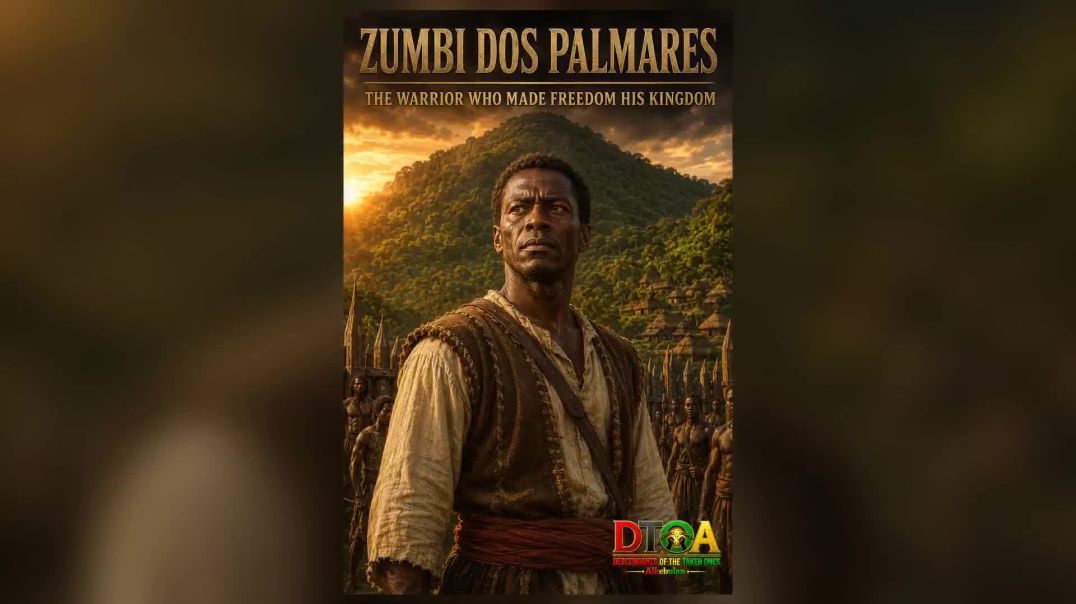
The Warrior Who Made Freedom His Kingdom Zumbi dos Palmares Before Brazil abolished slavery and before freedom was written into law, Africans and their descendants were already building freedom with their own hands. High in the forested mountains of northeastern Brazil stood Palmares the greatest and longest-lasting quilombo in Brazilian history. A quilombo was a community established primarily by Africans who had escaped enslavement, but Palmares became far more than a hiding place. It evolved into a federation of fortified settlements where thousands cultivated crops, raised families, traded with neighboring communities, and defended their independence.
At the heart of its final resistance stood Zumbi dos Palmares. Zumbi was born around 1655 in the region now part of the Brazilian state of Alagoas. Traditional accounts say he was captured as a child, given to a Catholic priest, and baptized Francisco. He learned Portuguese and Latin before escaping in his youth and returning to Palmares. Because documentation of his early life is limited, some details remain uncertain. What is not uncertain is the power Palmares represented. Portuguese colonists relied on enslaved African labor to generate enormous wealth from Brazil’s plantations. Every escape threatened that system. Every successful quilombo proved that Africans were neither naturally enslaved nor incapable of governing themselves. Palmares survived repeated attacks by Dutch and Portuguese forces because its people knew the mountains, forests, and defensive terrain. Its inhabitants built political, military, and economic networks that sustained their communities for generations. Palmares was not merely resisting slavery—it was demonstrating an alternative to it. In 1678, colonial authorities offered a peace agreement to Ganga Zumba, one of Palmares’ most important leaders. The agreement promised freedom to certain residents who relocated and submitted to Portuguese authority. However, it did not guarantee freedom for everyone, particularly Africans who had escaped slavery after the agreement. Zumbi rejected the arrangement. He understood that freedom granted only to some—while others remained chained—was not true freedom. He emerged as a leading military commander and the most prominent leader of Palmares’ ongoing resistance. For years, Zumbi and the Palmarinos fought against heavily armed expeditions sent to destroy them. They defended their homes against soldiers, mercenaries, and slaveholders determined to return Black people to captivity.
In 1694, a massive colonial assault equipped with artillery broke through the defenses of Macaco, Palmares’ political center. The settlement fell, but Zumbi escaped and continued resisting. The Portuguese authorities knew that destroying buildings would not be enough. As long as Zumbi lived, the idea of Palmares lived with him. After being betrayed and located by colonial forces, Zumbi was killed on November 20, 1695. His body was mutilated, and his head was taken to Recife and publicly displayed. Colonial officials sought to prove that Zumbi was mortal and to frighten other Africans away from rebellion. Instead, they created a martyr. Palmares did not disappear immediately after Zumbi’s death. Smaller communities and resistance groups continued fighting into the eighteenth century. More importantly, its example survived wherever enslaved people fled, rebelled, and built communities beyond the reach of their captors. Brazil did not legally abolish slavery until May 13, 1888—nearly two centuries after Zumbi’s death. Today, many Afro-Brazilians commemorate November 20 instead because it honors Black people as the creators of their own liberation, rather than portraying freedom as something handed down by the monarchy. November 20 is now observed throughout Brazil as the National Day of Zumbi and Black Consciousness. It became a nationwide public holiday in 2024. Zumbi was not a man waiting for someone else to recognize his humanity. He belonged to a people who planted crops, built settlements, organized defenses, and governed themselves on land the colonial system claimed as property. His enemies displayed his head to declare that resistance had ended. More than three centuries later, Brazil speaks his name. Zumbi dos Palmares did not ask the slaveholding world for freedom. He defended a Black nation that had already claimed it.
We speak your name, Zumbi dos Palmares. DTOA Reflection Palmares teaches us that enslaved Africans did more than merely survive oppression. They organized armies, developed economies, preserved cultural traditions, and established independent communities. Zumbi’s greatest legacy is not merely that he died fighting slavery. It is that he lived as a free African descendant—and defended others’ right to do the same. Descendants of the Taken Ones honors Zumbi dos Palmares—the warrior who made freedom his kingdom. To support the channel, please like and subscribe to receive new videos.







1 Comments
cliprize
9 days ago