

345 Views· 09/04/26· Black History
African Warrior Queen

African Warrior Queen Born to Lead, Trained to Conquer
An original DTOA tribute inspired by the warrior queens, royal mothers and women commanders of Africa.
Before foreign maps divided the continent, before outsiders attempted to rename its kingdoms and erase its dynasties, Africa already knew the authority of powerful women.
They ruled from golden courts.
They negotiated peace between rival nations.
They commanded armies, protected trade routes, defended sacred lands and raised generations prepared to carry their people forward.
This is the story of an African Warrior Queen—not one specific historical ruler, but a symbolic daughter of the many queens whose courage shaped Alkebulan.
She was born beneath a sky illuminated by fire.
On the night of her arrival, the elders gathered outside the royal compound and listened as drums echoed through the hills. The child did not cry for long. She opened her eyes, clenched her small hand and stared toward the sound as though she already recognized the call of her people.
Her mother named her Amara, meaning one who would endure.
Her father, the reigning king, ordered that she be educated not merely as a princess but as a future protector of the nation. She learned history from the royal griots, diplomacy from the council of elders and military strategy from commanders who had guarded the kingdom for decades.
While other children rested beneath shade trees, Amara practiced with the spear.
She learned to ride before she was tall enough to mount a horse without assistance. She studied the movement of armies, the geography of neighboring lands and the sacred responsibilities carried by those who held power.
She was taught that a crown was not decoration.
It was a covenant.
The ruler belonged to the people, and the strength of the throne depended upon the well-being of the farmer, healer, blacksmith, merchant, soldier, mother and child.
As Amara matured, she became known for her discipline. She could strike a distant target while riding at full speed. She could listen to opposing chiefs, identify the true source of their conflict and negotiate a settlement before blood was spilled.
But she was never deceived by the illusion that peace required weakness.
Peace had to be protected.
When rival forces crossed the kingdom’s northern boundary, believing that a woman would be unable to organize an effective defense, Queen Amara rode out to meet them.
She did not remain hidden behind palace walls.
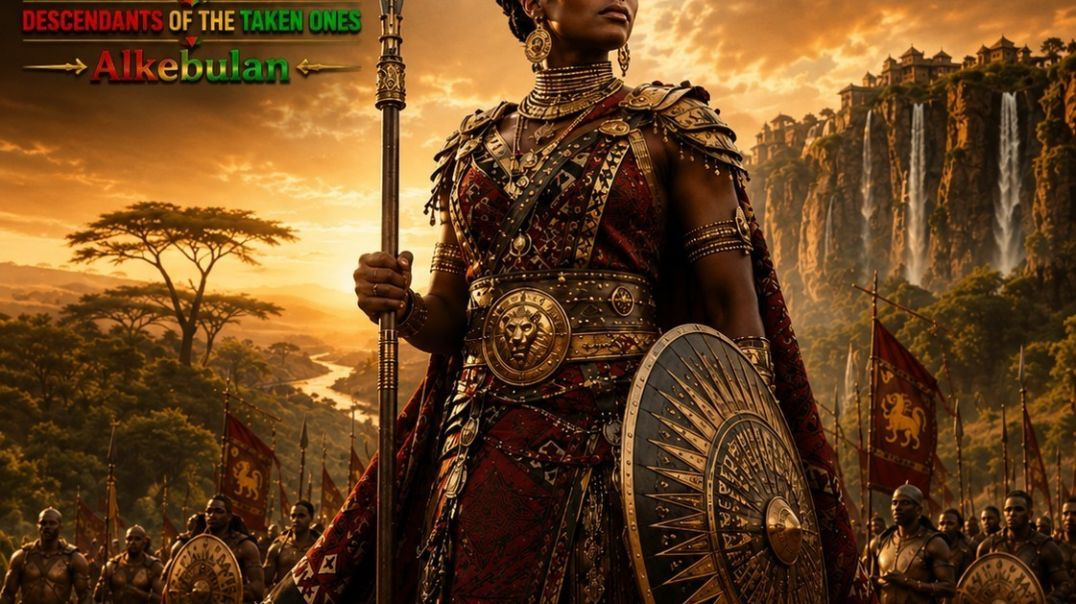
She stood before her warriors wearing gold armor, a leopard mantle and the royal crown of her ancestors. In one hand she carried a spear. In the other she held the staff of authority.
Behind her stood thousands of men and women who had sworn to defend their homeland.
Amara looked across the assembled ranks and reminded them that the land beneath their feet carried the footsteps of generations. The rivers had nourished their ancestors. The fields fed their children. The shrines preserved their memory.
No invader had the right to claim what the people had built.
The queen raised her spear.
The drums began.
The warriors advanced.
Amara did not fight for conquest or personal glory. She fought because surrender would have placed her people, their resources and their future under the control of others.
Her strategy was precise. Scouts guided the enemy toward narrow terrain where their numbers became a disadvantage. Archers occupied the surrounding heights. Mounted warriors cut off their retreat while ground forces protected the villages.
By sunset, the invasion had failed.
The kingdom remained free.
But Amara’s greatest achievements came after the battle.
She understood that military victory meant little if the people continued to struggle. She ordered the construction of wells, expanded agricultural lands and established protected markets where traders from different regions could exchange gold, salt, cloth, iron, grain and medicine.
She created schools where young people learned mathematics, astronomy, metalworking, language, governance and the history of their ancestors.
She appointed women to councils traditionally controlled by men—not because they were women, but because their knowledge, discipline and leadership had already strengthened the nation.
Under her rule, the kingdom prospered.
Travelers who entered its capital described wide roads, guarded marketplaces, carved stone buildings and a royal court filled with scholars, artisans, diplomats and military leaders.
Yet Queen Amara remained vigilant.
She knew that every generation faced a different kind of enemy. Some arrived carrying weapons. Others arrived carrying agreements designed to steal land, resources or authority. Some attempted to divide neighboring peoples so they could control them separately.
The queen taught her heirs to examine every promise, protect the kingdom’s sovereignty and never exchange the future of the people for temporary personal wealth.
Years later, when Amara’s hair had become silver, she returned to the hill overlooking the capital. Below her, children ran through the marketplace. Farmers brought full harvests through the city gates. Soldiers trained beside young officers who would one day replace them.
The kingdom no longer depended entirely upon her strength.
She had built institutions capable of surviving beyond her lifetime.
That was her true victory.
The African Warrior Queen was more than a fighter seated upon a throne. She was a strategist, nation-builder, protector and mother of the future.
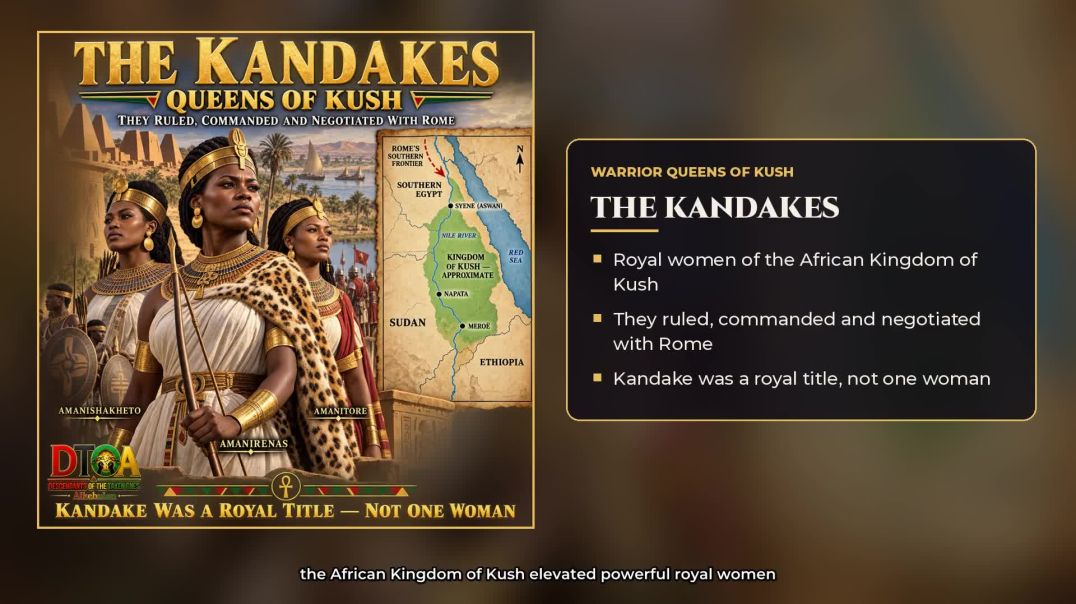
She carried the courage of Yennenga, the leadership of Amina, the resistance of Nzinga, the determination of Yaa Asantewaa and the sacred authority of the many African women whose names were never written into colonial history books.
Her image represents all of them.
The women who stood when their nations were threatened.
The women who refused to let others determine their destiny.
The women who understood that leadership was not granted by gender—it was proven through wisdom, sacrifice and service.
She was born to lead.
She was trained to conquer every obstacle placed before her.
And she was destined to build a kingdom strong enough to outlive her.
She was the African Warrior Queen.
Her crown represented responsibility.
Her spear represented resistance.
Her throne represented a people who refused to disappear.












2 Comments
cliprize
10 days agoJOSEPH ELISHA
1 month ago